IKAN Talent Mobility · Country & Cultural Guide · 2026 Edition
An IKAN Talent Mobility orientation guide
DiscoveringIndia
An introduction and orientation guide to the world's largest democracy, its people, languages, regions, rhythms and rituals. Designed for you and your family, to better understand life in the country you are about to call home.
1.46B
Population
28+8
States & UTs
22
Scheduled Languages
5,000+
Years of Civilisation
Republic of IndiaUTC+5:30 (IST)Currency · INR ₹Dial Code · +91
Where are you in your India journey?
Jump to what matters right now.
This guide is designed to be opened in phases, not read in one sitting. Pick the moment that matches you.
Republic of India · Bhārat Gaṇarājya · Republic Day 26 January · Independence Day 15 August · Capital: New Delhi · National Anthem: Jana Gana Mana
A Welcome From IKAN
The world's most extraordinary assignment destination.
India does not introduce itself gently. It arrives all at once: colour, sound, scale, generosity. For you and your family, this guide is your starting compass: a way of understanding the country before its many particulars (immigration, housing, schooling, daily logistics) are layered on top through your dedicated destination programme.
Foreword
Welcome to India, a country that doesn't ask to be understood quickly. It asks to be experienced over time.
This guide is a cultural and country orientation, prepared by IKAN Talent Mobility for you and your family, whether you are relocating to India from abroad or moving within the country. It complements, rather than duplicates, the destination services material your IKAN consultant will share separately.
Inside, we have collected what matters most to settle the mind and the spirit before the move: India's geography and seven regions, its languages and faiths, the way its seasons turn, its festivals and food, the apps that quietly run daily life, and the customs that reward those who pay attention. This guide will help you navigate housing, schooling and the daily living that follows.
Read it in any order. Return to the sections that match where you are in your journey. And know that the on-ground IKAN team are an email, a call, or a namaste away.
With care from the IKAN teamIKAN Talent Mobility · India
How to use this guide
Think of this as the orientation read, the one you can open and read while in flight. The detailed destination-services workbook (immigration, FRRO, leasing, schools placement, settling-in) is delivered as a separate package by your IKAN consultant once the assignment is confirmed.
India in numbers
1.46B
People
Most populous nation · UN 2025 estimate
4th
Largest Economy
Set to be 3rd by 2030
~6.5%
Annual GDP Growth
Fastest among large economies
~29°
Latitude Span
8°N (Tamil Nadu) → 37°N (Kashmir)
🌐The country at a glance
Official Name
Republic of India (Bhārat Gaṇarājya)
Capital
New Delhi
Most Populous City
Delhi (urban agglomeration) · Mumbai is the financial capital
India is not a country but a sub-continent, a layering of civilisations, languages, climates and tastes that took five thousand years to settle and still, peacefully, refuses to.
A common saying for first-time arrivals
02
Geography
The seven regions of India
North · South · East · West · Central · North-East · Islands
A Country of Regions
One nation, seven worlds.
India is best understood not as a single country but as seven distinct cultural geographies, each with its own language families, food traditions, climate, dress, music and temperament. Knowing your region transforms how you experience the assignment.
The seven regions at a glance
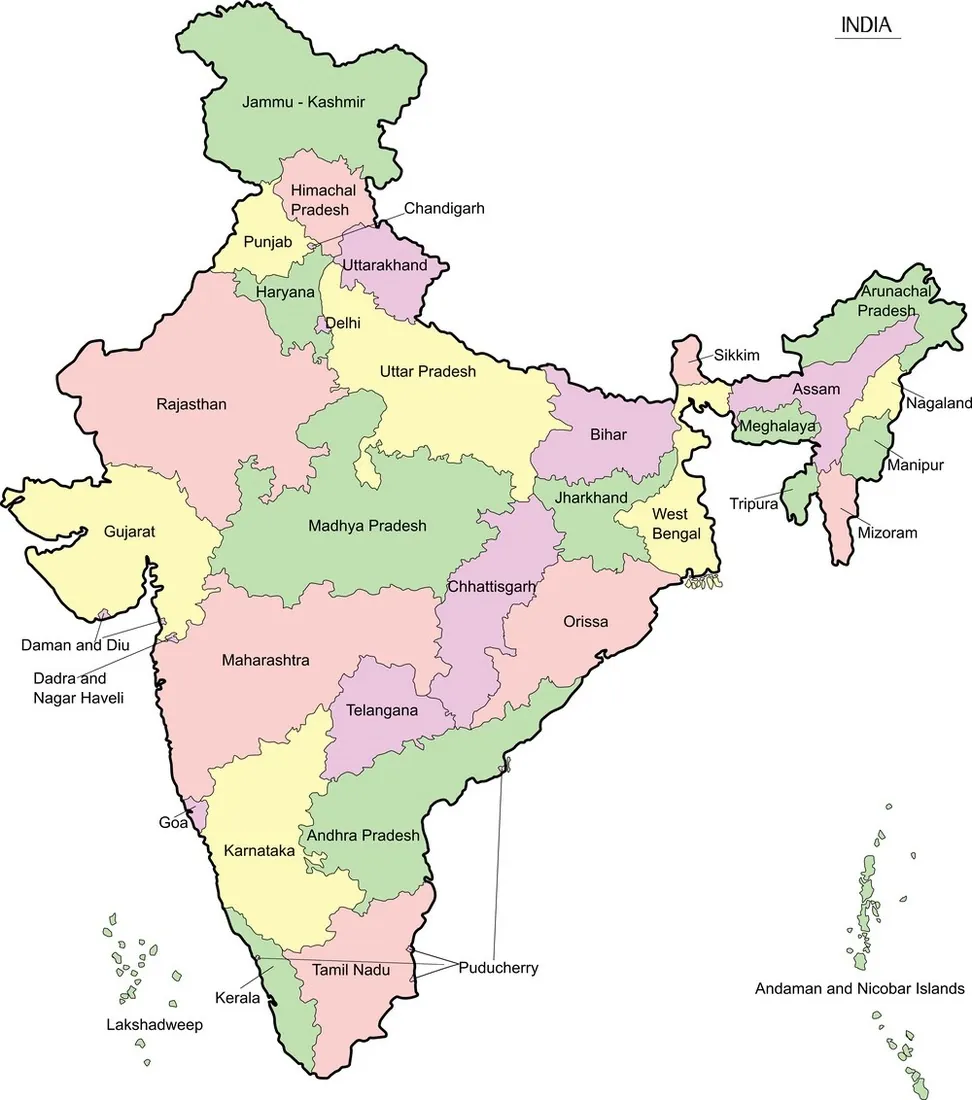
A working geography, the political map of India showing all 28 states and 8 union territories. The legend on the right groups them into the seven cultural-economic regions an international family will hear referenced again and again.
Seven cultural-economic regions
A working mental model your IKAN consultant will reference repeatedly. The map's colours just separate adjacent states for legibility, they don't match these regions.
Karnataka, Tamil Nadu, Kerala, Andhra Pradesh, Telangana
IS
Islands
Andaman & Nicobar, Lakshadweep
The Deccan Plateau is a geographic landform (not a region) sitting across the central-south band, Bengaluru and Hyderabad both sit on its edge.
North India
The Hindi heartland
Delhi, the Ganges plain and the Himalayan crown. Hearty wheat cuisine, hot summers and cold winters. The political, cultural and language centre of Hindi India.
DelhiPunjabHaryanaUPRajasthanHPUttarakhandJ&K
South India
The Dravidian south
Tropical, temple-rich, technology-led. Rice and coconut cuisine, classical music and dance, filter coffee, and India's two leading tech corridors, Bengaluru and Hyderabad.
Kolkata's intellectual swagger, Odisha's temple coastline, mustard-fish-rice traditions, and the literary and artistic heart of modern India. Durga Puja capital of the world.
West BengalOdishaBiharJharkhand
West India
The commercial coast
Mumbai's hustle, Gujarat's enterprise, Goa's beaches. India's industrial and financial engine, with sea-facing cities and the largest expat communities outside Delhi-NCR.
MaharashtraGujaratGoaD&NH-Daman
Central India
The tiger belt
India's wild heart: Kanha, Bandhavgarh and Pench national parks; the marble temples of Khajuraho; tribal cultures preserved across forested plateaus. Increasingly a manufacturing destination.
Madhya PradeshChhattisgarh
North-East India
The seven sisters
Seven states tucked between Bhutan, China, Myanmar and Bangladesh, tribal cultures, tea plantations, the highest rainfall on earth (Cherrapunji) and India's most distinctive cuisines.
Two distinct island chains, the Andaman & Nicobar group in the Bay of Bengal and the Lakshadweep atolls off the Kerala coast. Beaches, coral reefs, distinct tribal cultures, and India's south-easternmost reach.
Andaman & NicobarLakshadweep
🏔️Five great landforms
Himalayas
The northern wall, nine of the world's ten highest peaks lie along India's borders.
Indo-Gangetic Plain
The fertile river belt feeding an estimated 600 million people; home to Delhi, Lucknow, Patna, Kolkata.
Thar Desert
India's arid west, Rajasthan's golden cities (Jaisalmer, Jodhpur) and the Rann of Kutch.
Deccan Plateau
The volcanic tableland of southern India, Bengaluru, Hyderabad, Pune sit on its edges.
Coastal & Islands
7,500 km of coastline, plus the Andaman, Nicobar and Lakshadweep archipelagos.
🌊The waters that shape India
Ganga (Ganges)
2,525 km, sacred mother-river of Hindu civilisation, flowing east to the Bay of Bengal.
Brahmaputra
One of the world's largest by volume, the lifeline of Assam and the north-east.
Indus
Cradle of the 5,000-year-old Indus Valley civilisation; flows mostly through Pakistan today.
Yamuna
The river of Delhi and Agra, the Taj Mahal stands on its banks.
Godavari & Krishna
Southern India's great rivers, feeding the rice bowls of Andhra and Telangana.
🧭
The 'four India' mental model: Most international families find it useful to think of India in four practical zones, North (Delhi-NCR, Hindi, government, hearty cuisine), South (Bengaluru, Chennai, Hyderabad, tech, Dravidian languages, milder climate), West (Mumbai, Ahmedabad, commerce, Marathi/Gujarati) and East (Kolkata, the north-east, Bengali, arts, tea). Most expat assignments land in the first three.
03
Society
People, language & religion
22 scheduled languages · 9 major faiths · 4,000+ ethnic communities
The Indian Mosaic
A young, urbanising, strikingly diverse nation.
India's population is its most extraordinary feature, younger than any other large economy, growing fastest in cities, and spread across more languages, faiths and ethnicities than any other country on earth.
28
Median Age (years)
Vs. China 39, USA 38, Japan 49
36%
Urban Population
520M+ city-dwellers
~77.7%
Literacy Rate
English literacy ~12% (largest after US)
~12%
English Speakers
~150M · world's 2nd largest
Languages · the twenty-two
India's Constitution recognises 22 scheduled languages, but more than 120 languages and 270+ mother tongues are spoken daily. Hindi and English are both official languages of the Union government; English remains the language of higher education, business, the judiciary and inter-state communication.
Hindi
हिन्दी
North · 528M speakers
Bengali
বাংলা
East · 97M speakers
Marathi
मराठी
Mumbai/Pune · 83M
Telugu
తెలుగు
Hyderabad · 81M
Tamil
தமிழ்
Chennai · 75M · classical
Gujarati
ગુજરાતી
Gujarat · 55M
Urdu
اُردُو
North · 51M
Kannada
ಕನ್ನಡ
Bengaluru · 44M
Odia
ଓଡ଼ିଆ
Odisha · 38M · classical
Malayalam
മലയാളം
Kerala · 35M · classical
Punjabi
ਪੰਜਾਬੀ
Punjab · 33M
Assamese
অসমীয়া
Assam · 15M
Maithili
मैथिली
Bihar · 13M
Sanskrit
संस्कृतम्
Classical · liturgical
Konkani
कोंकणी
Goa · coast
Nepali · Manipuri · Dogri · Bodo · Santali · Kashmiri · Sindhi
+ 7 more
Regional & tribal
💡
The English advantage: Every metropolitan area, airports, hotels, hospitals, schools, restaurants, offices and gated residential communities, functions in English. You can live and work in India for years without learning a local language. That said, ten words of Hindi (or your city's regional tongue) earn disproportionate goodwill: drivers smile wider, vendors quote fairer prices, and meetings warm faster.
Religions of India
India is the birthplace of four major world religions (Hinduism, Buddhism, Jainism, Sikhism) and a thousand-year home to four more (Islam, Christianity, Judaism, Zoroastrianism). Religious life is openly visible in daily India, in dress, food, festivals, architecture and public holidays. The population shares shown below reflect 2011 Census proportions applied to today's population, indicative.
🕉️
Hinduism
~79.8% · ~1.15B
World's oldest living religion. No single founder; tradition speaks of 33 koti devatas (here koti means 'type/class', not literally 330 million gods). Defines daily ritual, festivals and architecture across India.
☪️
Islam
~14.2% · ~204M
India is home to the world's third-largest Muslim population. Strongest in Hyderabad, Lucknow, Mumbai, Kashmir, Kerala.
✝️
Christianity
~2.3% · ~33M
By tradition, it arrived in Kerala around 52 CE with St Thomas. Largest communities in Kerala, Goa, the North-East, Tamil Nadu.
🪯
Sikhism
~1.7% · ~25M
Founded 15th-century Punjab. Concentrated in Punjab, Delhi, Haryana. Recognised by the turban and uncut hair.
☸️
Buddhism
~0.7% · ~10M
Born in India under the Bodhi tree in Bodh Gaya. Today strongest in Ladakh, Sikkim, Arunachal & among Dalit communities.
🪔
Jainism
~0.4% · ~5M
Strict non-violence, vegetarianism (often no root vegetables). Hugely influential in business across Gujarat, Rajasthan, Mumbai.
🔥
Zoroastrian
~50,000 (Parsi, declining)
Persian refugees who arrived in Gujarat 1,300 years ago. Tiny community of disproportionate influence in Mumbai industry.
✡️
Judaism & Bahá'í
Historic minorities
Cochin, Bene-Israel and Baghdadi Jewish communities along the west coast. The Lotus Temple in Delhi is one of the world's most visited Bahá'í Houses of Worship.
🙏
Religious respect at a glance: Remove shoes before entering any place of worship or Indian home. Cover head and shoulders at Sikh, Muslim and many Hindu/Jain sites. Photograph deities only after asking. Never point feet at an altar or person.
🥩
Dietary sensitivities are religious, not preference: Beef is restricted or banned in many states (cow is sacred in Hinduism). Pork is forbidden for India's Muslim population (~204M). When hosting, ask, or default to a vegetarian menu, which is universally acceptable.
Cradle of faiths
India is the only country where the four world religions born here still live alongside the four that arrived.
A working principle
When in doubt, ask. Indians are endlessly patient with the curious foreigner. They are far less patient with the dismissive one.
04
Weather
Climate & seasons
Six classical seasons (four in practice) · North vs. South · The monsoon · Air quality
India in Four Seasons
Where you arrive determines which India you meet first.
India spans nearly 30 degrees of latitude, from Himalayan snow to tropical backwaters. Climate varies dramatically by region. The single most important calendar fact for anyone moving here is the monsoon, which transforms the country between June and September.
India's working seasons
Four working seasons drive daily life and the calendar. Two short shoulder windows, Spring (Feb-Mar, blossoms, mild warmth, festival of Holi) and Autumn (mid-Sep to mid-Nov, golden light, festival of Navratri/Diwali), sit between them and are often the loveliest weeks of the year.
❄️
Winter
November to February
The most pleasant five months across most of India. South: 18-28°C, blissful. North: 5-20°C with dense morning fog in December-January. The peak season for arrivals, weddings and tourism.
If you can choose, arrive in October-November.
🔥
Summer
March to May
Heat builds steadily. North India sees 40-47°C peaks; the Deccan stays milder at 32-38°C; coastal cities add humidity. Air-conditioning becomes a way of life; locals slow the day around noon.
Heat-stroke is real. Hydrate, salt-up, stay indoors 12-4pm.
🌧️
Monsoon
June to September
India's most dramatic season, the south-west monsoon sweeps north over four months, dropping the year's rainfall. Mumbai sees 2,400mm; Cherrapunji 11,000mm. The land turns electric green; the sea turns silver.
Embrace it. Waterproof shoes, an offline maps app and patience.
🍂
Post-Monsoon
October
The brief, golden window between the rains and winter. Clear skies, washed light, perfect temperatures everywhere. The country shifts into festival mode, Navratri, Dussehra, Diwali fall in this window.
The single best month to be in India.
A note for the curious
Traditional Sanskrit calendars recognise six seasons (ritu) of two months each, Vasant (spring), Grishma (summer), Varsha (monsoon), Sharad (autumn), Hemant (pre-winter) and Shishir (winter). You'll see them referenced in poetry, classical music ragas and Ayurvedic guidance.
North vs. South vs. Coast · a working comparison
A common mistake is to assume "India weather". There is no such thing. A January morning in Delhi (5°C, fog) and a January morning in Chennai (24°C, humid) are in different climate zones.
Region
Winter (Dec-Feb)
Summer (Apr-Jun)
Monsoon
Best Window
Watchouts
North, Delhi-NCR, Punjab, UP
3-20°C · Dense fog
40-47°C · Dry heat
Jul-Aug · 600-800mm
Oct-Mar
Air quality Nov-Feb
South, Bengaluru, Hyderabad
15-28°C · Mild & pleasant
30-38°C · Bearable
Two monsoons · spread out
Year-round
Traffic; surprise October rain
West Coast, Mumbai, Goa
18-32°C · Dry, lovely
32-40°C · Humid
Jun-Sep · 2,000-3,000mm
Oct-Feb
Monsoon flooding · humidity
East Coast, Chennai
22-30°C · Humid
34-42°C · Very humid
Oct-Dec · NE monsoon
Jan-Feb
Year-round humidity · cyclones
East, Kolkata
14-26°C · Pleasant
30-40°C · Sticky
Jun-Sep heavy
Nov-Feb
Cyclones in Bay of Bengal
Himalayas, Shimla, Manali, Leh
-10 to 10°C · Snow
15-25°C · Cool
Variable
Apr-Jun, Sep-Nov
Roads close in heavy snow
Deccan inland, Pune
10-28°C · Crisp
32-38°C · Moderate
Jun-Sep moderate
Oct-Mar
Few; one of India's best
Air quality · what to know
Air quality varies dramatically by city and season. Delhi-NCR is the single most important caveat, AQI can reach 400 to 500 (Hazardous) between October and February as stubble-burning, cold air and traffic combine. South Indian cities, Mumbai's coastal breeze and the Deccan plateau are materially cleaner.
City
Annual character
Worst
Rating
Delhi-NCR
Severe Nov-Feb · stubble + cold
November
High Risk
Kolkata
Moderate-poor in winter
Dec-Jan
Elevated
Mumbai
Moderate; best in monsoon
Dec-Feb
Moderate
Hyderabad
Moderate; dry climate helps
Dec-Jan
Moderate
Bengaluru
Generally good
Dec-Feb
Good
Chennai
Good · coastal winds
Oct-Nov
Good
Pune
Among India's cleanest metros
Dec-Feb
Good
A small kit, deployed early
🌬️For Delhi-NCR families
Invest in HEPA air purifiers for every bedroom and living room (Dyson, Xiaomi, Sharp, Honeywell are common). Stock N95 masks in every bag. Install the AirVisual (IQAir) or SAFAR app and set red-alert thresholds for your household.
☔For monsoon season anywhere
Waterproof ankle boots beat any umbrella. Pre-download offline maps. Keep ₹1,000 in cash, digital payments occasionally drop in heavy rain. Inspect any new apartment for ceiling leaks before signing.
☀️For summer everywhere
SPF 50+, UV index runs extreme even on hazy days. Loose cotton, linen, light colours. Carry an electrolyte sachet (Electral, ORS) in your bag. Schedule outdoor errands before 11am or after 5pm.
⚠️
The Delhi air-quality conversation: If you or a family member has asthma, COPD, severe allergies or young children, raise this in pre-decision with your IKAN consultant. Bengaluru, Hyderabad, Pune and Mumbai are significantly easier on respiratory health and may be considered if role flexibility allows.
05
Society in practice
Culture, customs & etiquette
Greetings · Dress · Hosting · Business norms · Family · Gifts
First Impressions
Small gestures, big goodwill.
India is warm, curious and forgiving with foreigners, but a handful of customs go a remarkably long way. None of these are difficult. All of them are noticed.
🙏Greetings
Namaste (palms pressed together at chest, slight bow) is the universal Indian greeting. Always appreciated, especially with elders, in religious places and when meeting traditional clients. A handshake is standard in modern business.
Touching feet is a sign of deep respect for elders, you do not need to initiate this, but accept it gracefully if a younger person offers it to you (place your hand on their head in blessing).
👔Dress code
Business is conservative-smart, suits and shirts in the north, lighter linens in the south. Women: knee-length or longer skirts, modest necklines. Shoulders covered at religious sites; head covered at Sikh and many Muslim sites.
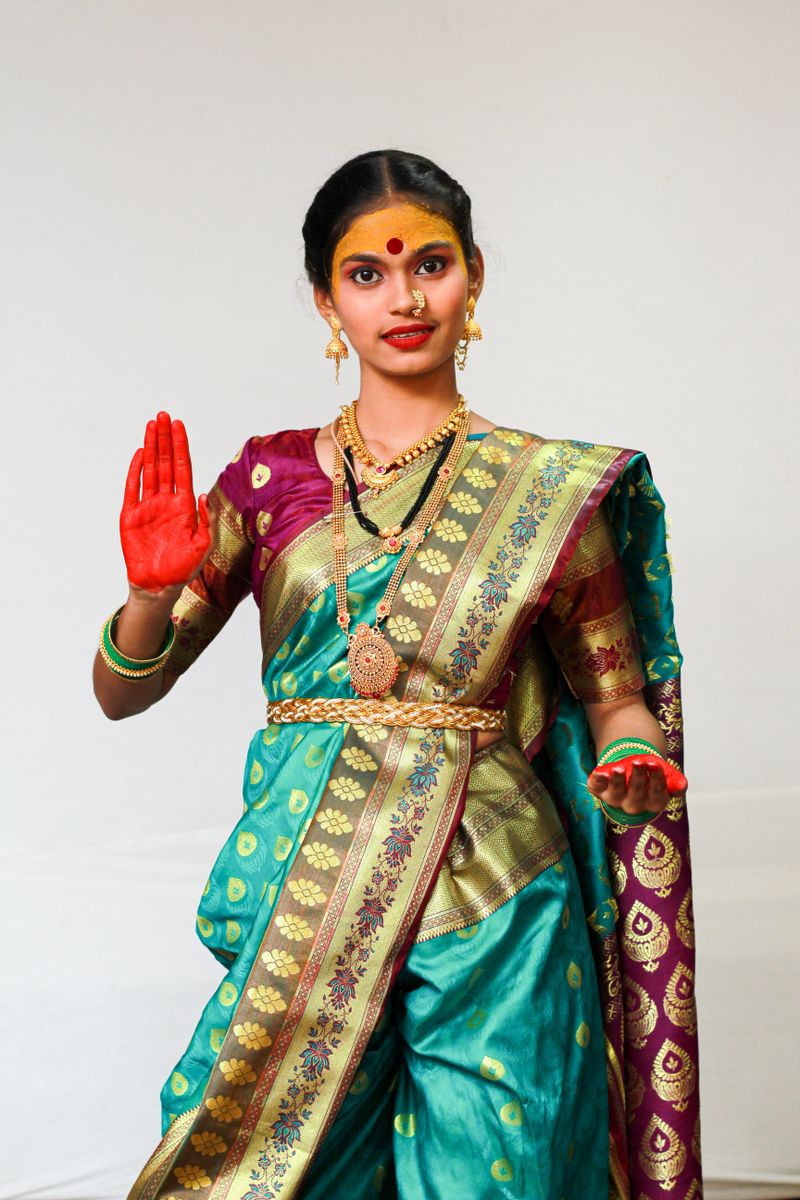
India loves colour, embrace it. Festival dress and weddings are not the place for muted tones.
🤝Personal space
Personal space in India runs about half what it does in the West. Queues are looser. Crowds in markets, transport and religious sites are dense by design. This is not rudeness, it's a different baseline.
Public displays of affection are uncommon. Same-gender hand-holding and arm-linking among friends is normal and platonic.
The cultural cheat-sheet
Two columns. Memorise both before week one.
✓ Do
Remove shoes before entering any home, temple or many small offices. Watch what the host does.
Greet with namaste, especially with elders. Most professionals will still offer a handshake.
Eat with the right hand, or with cutlery. Bread (roti, naan) is for picking up curry, not for plating.
Accept tea, water or food when offered. Refusing outright reads as cold. Say "thoda hi, please" (just a little) if you can't manage more.
Use both hands, or the right hand, when giving and receiving money, business cards, gifts or food.
Bring sweets, fruit or flowers when invited to an Indian home. Alcohol (wine or whiskey) only if you know the host drinks.
Ask before photographing people, religious ceremonies or military sites.
Address professionals with their title and surname, Mr. Sharma, Dr. Patel. Sir and Madam are universally respectful.
Bargain warmly in bazaars and markets. Smile. It's a social ritual, not a confrontation.
Tip generously where it matters, building staff, drivers, helpers, hotel housekeepers. Small amounts, frequently.
✕ Don't
Point with your feet or touch books, food or shrines with your shoes or feet. Feet are ritually low.
Use your left hand for eating, giving or receiving, particularly with elders or in religious settings.
Order beef in most Hindu-majority states (it is restricted or banned in Maharashtra, Gujarat, Delhi, UP and others).
Display affection publicly. Kissing on the cheek in greeting is uncommon and may cause discomfort.
Wear shorts, sleeveless tops or short skirts to religious sites. Some sites lend shawls; many don't.
Touch anyone's head, including children's, without consent. The head is ritually pure.
Drink tap water. Drink only bottled, filtered or boiled water for the first 3 to 6 months at least.
Refuse prasad (blessed food/sweet from a temple). Take it with the right hand and consume a little.
Bargain in malls, branded stores, supermarkets or restaurants, only in bazaars and with auto-rickshaws (where you should agree fare first).
Lose patience visibly. India runs on relationships and warmth; visible anger seldom speeds anything up.
💼Doing business in India
Relationships first. Indian business runs on trust, repeated meetings and long lunches. Expect the first meeting to be exploratory; substance arrives in meeting two or three. Patience reads as seriousness; rushed transaction reads as suspicious.
Hierarchy matters. Decisions cascade from the senior-most person in the room. Address them first; let them speak first; eye-contact deferentially.
Time is elastic. Meetings rarely start on time and often run long. Indian Stretchable Time: ±20 minutes is normal, ±60 minutes not unusual in informal settings. Professional and corporate environments are increasingly punctual.
Business cards: exchange with the right hand, study briefly before pocketing. Title and degree letters matter and are usually printed.
🏠The Indian home
An invitation to an Indian home is a small honour, treat it as one. Arrive 15 to 30 minutes after the stated time. Remove shoes at the door. Bring a small gift: sweets (mithai), good chocolate, fresh flowers, or a bottle if you know the host drinks.
Dinner often arrives 9 to 10pm. Compliment the cook; expect to be served seconds whether you ask or not. A clean plate is good manners.
Many homes have a puja (prayer) room. Treat it like a small temple, step in only if invited, and never with shoes on.
🎁Gifting
Sweets (Indian or imported), chocolates, dry-fruits boxes around Diwali, flowers (avoid white, funereal), books, single-malt for whisky-drinking hosts. Avoid leather for vegetarian families.
💸Tipping
Restaurants: 5 to 10% if no service charge already added. Drivers: ₹50 to 200/day plus ₹500 to 1,000 on long trips. Hotel housekeeping: ₹100 to 200/day. Bellhops: ₹50 to 100/bag. Salon: 10%. Building security and lift operators around festivals: ₹500 to 2,000.
👨👩👧👧Family-centric culture
Joint families remain common. Expect colleagues to ask about your spouse and children early, this is warmth, not intrusion. Children are universally welcomed in restaurants, weddings and most events.
The first three months in India test you. The fourth month, something shifts, the noise becomes music, the chaos becomes choreography, the strangers become neighbours. After a year, you will struggle to imagine living anywhere else.
A common observation from long-term residents
06
The year in colour
Festivals & celebrations
A festival every fortnight · Public holidays · How to participate
Year-Round
India is, at any moment, somewhere mid-celebration.
Festivals are the rhythm of Indian life. They shape what's open, what's cooked, what's worn, how cities feel and even how traffic flows. Engaging with them, even as an observer, is the fastest way to feel at home.
Where to celebrate what
A regional festival guide
Many major festivals are observed as state or restricted (optional) holidays rather than nationwide, but the intensity of celebration is regional. Where you live changes which festival you'll see lived most fully on your street.
Pan-India
🪔Diwali · 🎨Holi · 🕌Eid · 🎄Christmas
Felt and celebrated everywhere, offices close, neighbours visit, sweets travel further than usual.
Bihu, three Assamese harvest festivals across the year
South
Tamil Nadu · Kerala · Karnataka · Telangana · AP
Pongal, four-day harvest festival across Tamil Nadu (Jan)
Onam, Kerala's grand 10-day festival of boats and flower carpets (Aug/Sep)
Ugadi, New Year for Telugu & Kannada families (Mar/Apr)
Vishu, Kerala New Year (mid-April)
Bonalu, Telangana's monsoon festival (Jul/Aug)
The headline festivals every family should know
India is one of very few countries where you'll find state holidays for festivals of every major world religion celebrated in the country: Hindu, Muslim, Sikh, Christian, Buddhist, Jain. The 10 below are the ones to know.
Oct-Nov · 5 days · Hindu
Diwali
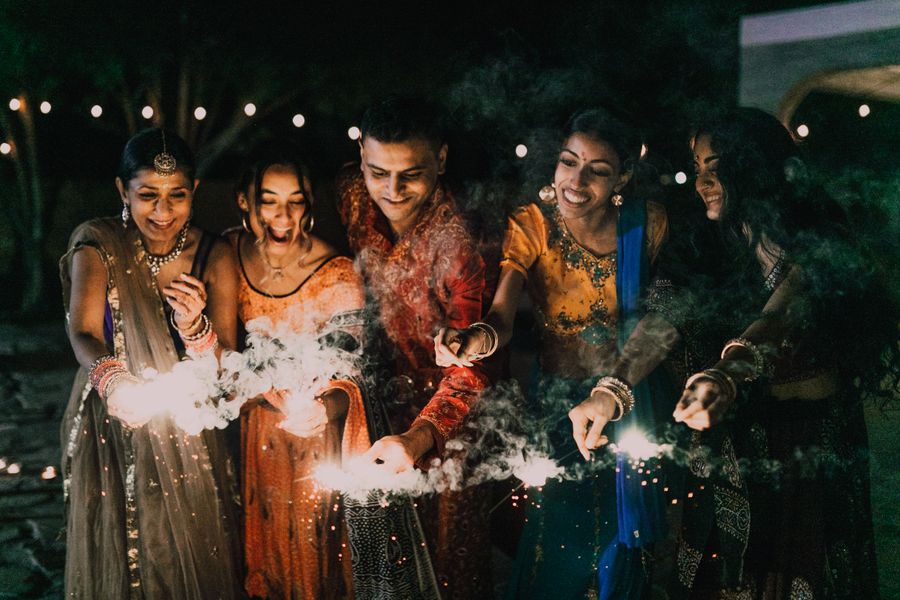
Festival of Lights. Lamps, fireworks, gifts of sweets, family dinners. The biggest celebration of the Hindu year, offices close, gifts circulate, cities glow.
March · 2 days · Hindu
Holi
Festival of Colours marking the arrival of spring. People throw coloured powder and water at each other. Universally celebrated; the most photographed Indian festival.
Aug-Sep · 10 days · Hindu
Ganesh Chaturthi
Mumbai's signature festival, giant Ganesha idols installed across neighbourhoods, then immersed in the sea in massive processions. Spectacular and unmissable.
Sep-Oct · 10 days · Hindu
Navratri & Durga Puja
Nine nights of dance (Gujarat's Garba, Bengal's Durga Puja). Different region, different expression of the same goddess. End in Dussehra, victory of good over evil.
Variable · 2 days · Muslim
Eid al-Fitr & Eid al-Adha
India's two great Muslim festivals, lavish celebrations in Hyderabad, Old Delhi, Lucknow, Mumbai, Kerala. Family feasts, biryani, sevaiyan.
Aug-Sep · 10 days · Hindu (Kerala)
Onam
Kerala's grand harvest festival, flower carpets (pookalam), the 26-dish Onam Sadhya banquet on banana leaf, snake-boat races. Inclusive across all communities.
Jan 13-14 · Harvest
Pongal · Makar Sankranti · Lohri
The harvest festival. Kite-flying in Gujarat, bonfires (Lohri) in Punjab, four-day Pongal in Tamil Nadu. Bull-taming Jallikattu in rural Tamil Nadu.
November · Sikh
Guru Nanak Jayanti
The birth of Sikhism's founder. Gurdwaras lit up; community kitchens (langar) feed thousands. Spectacular in Amritsar, Delhi, Chandigarh, Punjab.
25 December · National holiday · Christian
Christmas
A full national holiday in India. Spectacular in Goa, Kerala, the North-East, Mumbai, Bengaluru. Midnight Mass, plum cake, carols, gift-giving and family lunches, celebrated enthusiastically in India's Christian communities.
Mar-Apr · Christian
Good Friday & Easter
Good Friday is a national holiday. Easter brings a week of celebration in the Christian communities of Goa, Kerala and Mangalore, Easter eggs, processions, family Sunday-roasts. Both are observed warmly in India's Christian communities.
The full year of Indian festivals
Dates shift annually because most Indian festivals follow lunar calendars. Below are typical windows, your IKAN consultant will confirm exact dates for your assignment year.
Bhai Dooj · Chhath PujaBrother-sister bond · Bihar sun ritual
Var
Guru Nanak JayantiSikh founder's birthday
December
12
25
ChristmasNational holiday · grand in Goa, Kerala
31
New Year's EveBig in Goa, Mumbai, Bengaluru
🪔
How to participate as a family: Accept invitations, even one Diwali dinner or Eid lunch with an Indian colleague will transform how welcome you feel. Send Diwali sweets boxes to clients, vendors and your building staff (₹500-2,000 each is standard). Wish colleagues for major festivals across faiths, "Eid Mubarak", "Happy Diwali", "Merry Christmas". The gesture lands far above the effort.
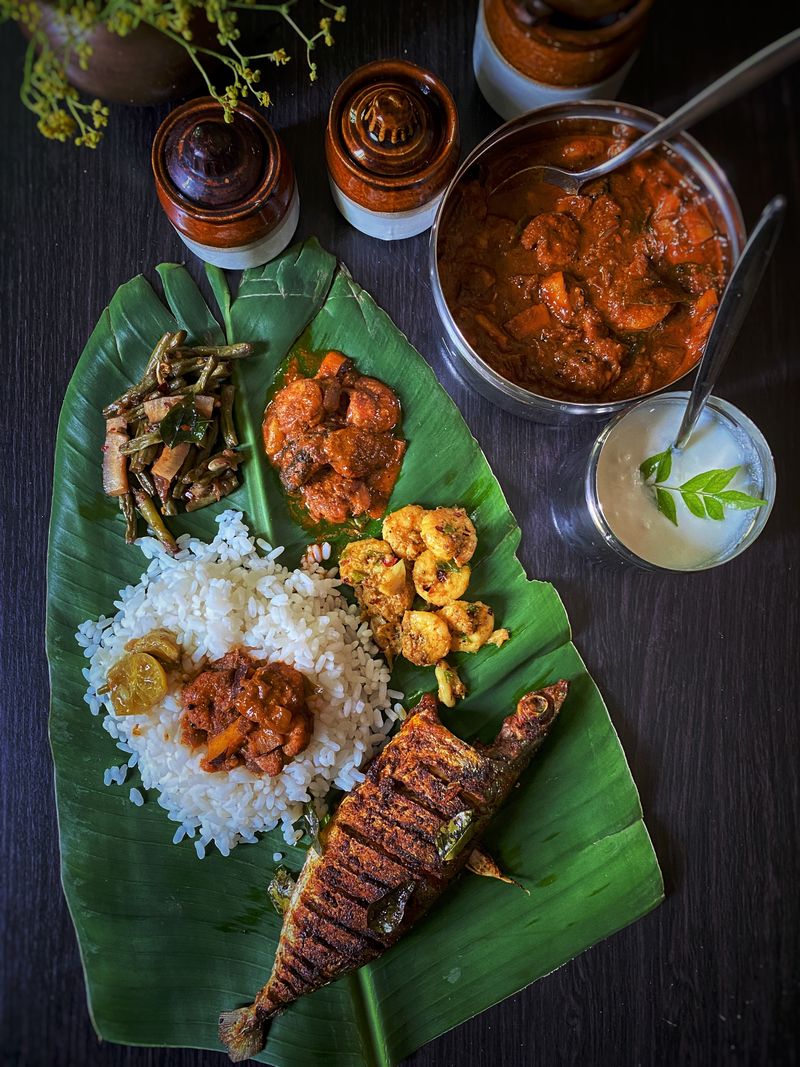
Five hundred kilometres in India means an entirely different cuisine.
India is not one food culture but eight, and within each, dozens. The grain shifts (wheat in the north, rice in the south, millets in the east). The fat shifts (ghee, mustard oil, coconut, sesame). The spice shifts. The way of eating shifts. Below is a starting map.
Indian food is not a cuisine. It's a confederation of cuisines, each as old and as deep as a European country's, and all of them are spoken on the same passport.
A food writer's working definition
The regional kitchens of India
North Indian · Punjabi, Jain, Bania & Marwari kitchen
Wheat-led: rotis, naan, parathas. Hearty Punjabi dhabas, refined Jain, Bania and Marwari kitchens (often vegetarian, no onion or garlic), rich slow-cooked curries with cream, ghee, dried fruits and dry spices. Tandoor-grilled meats and what the world widely recognises as "Indian food".
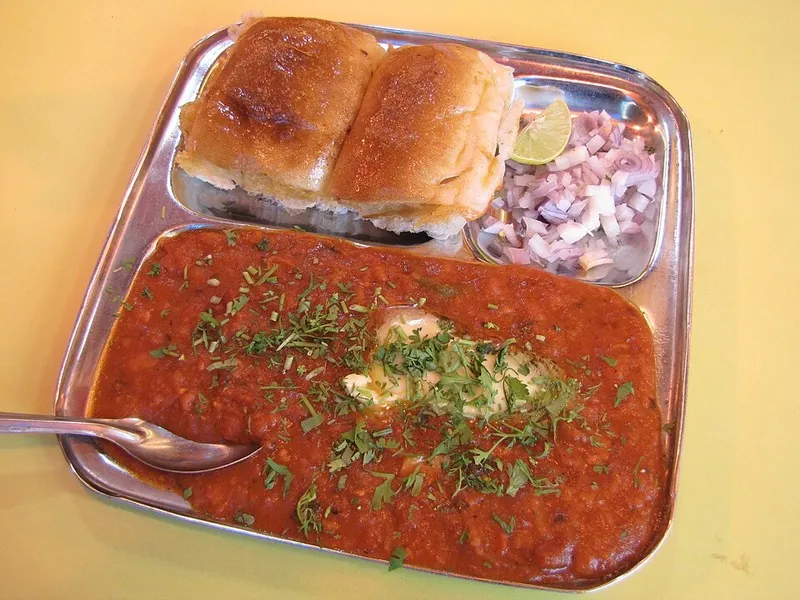
Three distinct traditions in one belt: Maharashtrian street food (Mumbai's vada-pav, pav-bhaji); Gujarati vegetarian thali (sweet, sour, savoury together); Goan Catholic fish-and-coconut (vindaloo, sorpotel, xacuti).
Vada PavPav BhajiMisal PavDhoklaTheplaUndhiyuGoan VindalooBombay DuckSolkadhi
Twelve dishes to try in your first month
Hyderabad
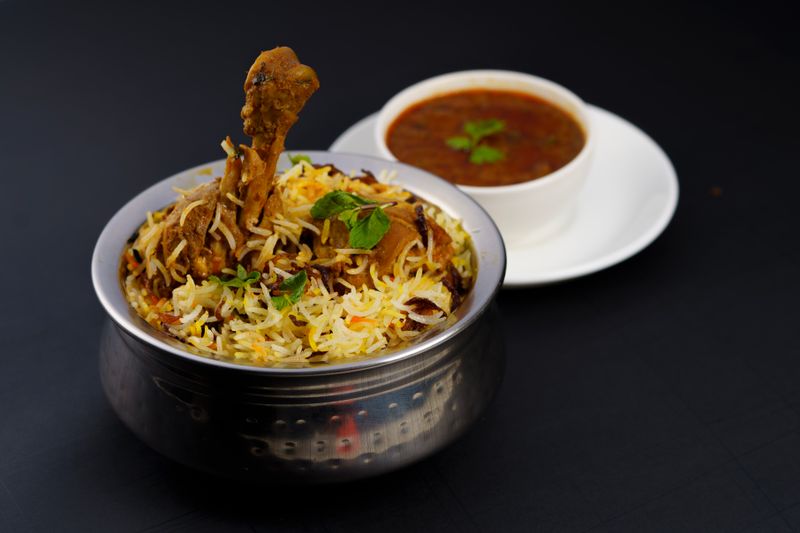
Hyderabadi Biryani
Long-grain basmati slow-cooked in a sealed pot (dum) with saffron, meat and aromatic spices. India's most ordered dish.
Delhi
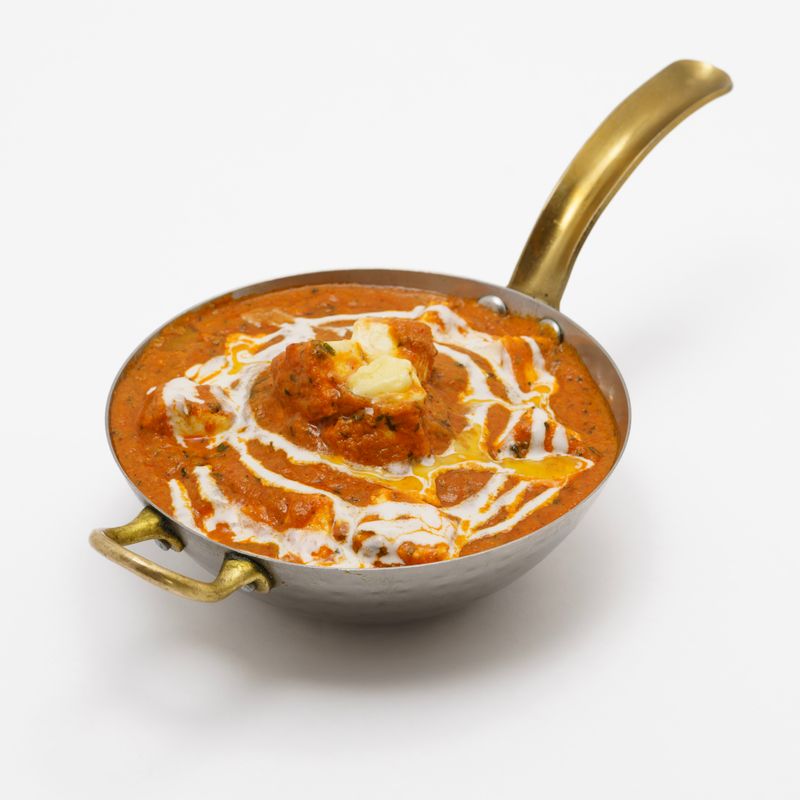
Butter Chicken (Murgh Makhani)
Tandoor-grilled chicken in a velvety tomato-cream sauce. Invented in Delhi in the 1950s. Best eaten with hot naan.
South India
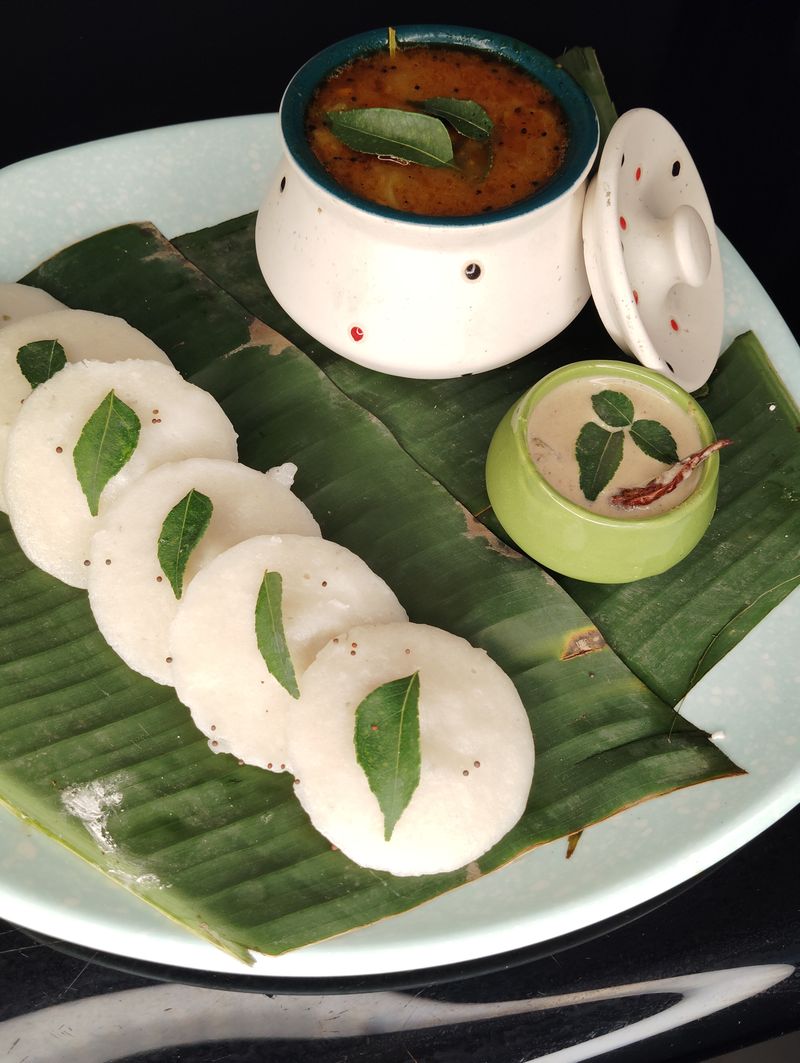
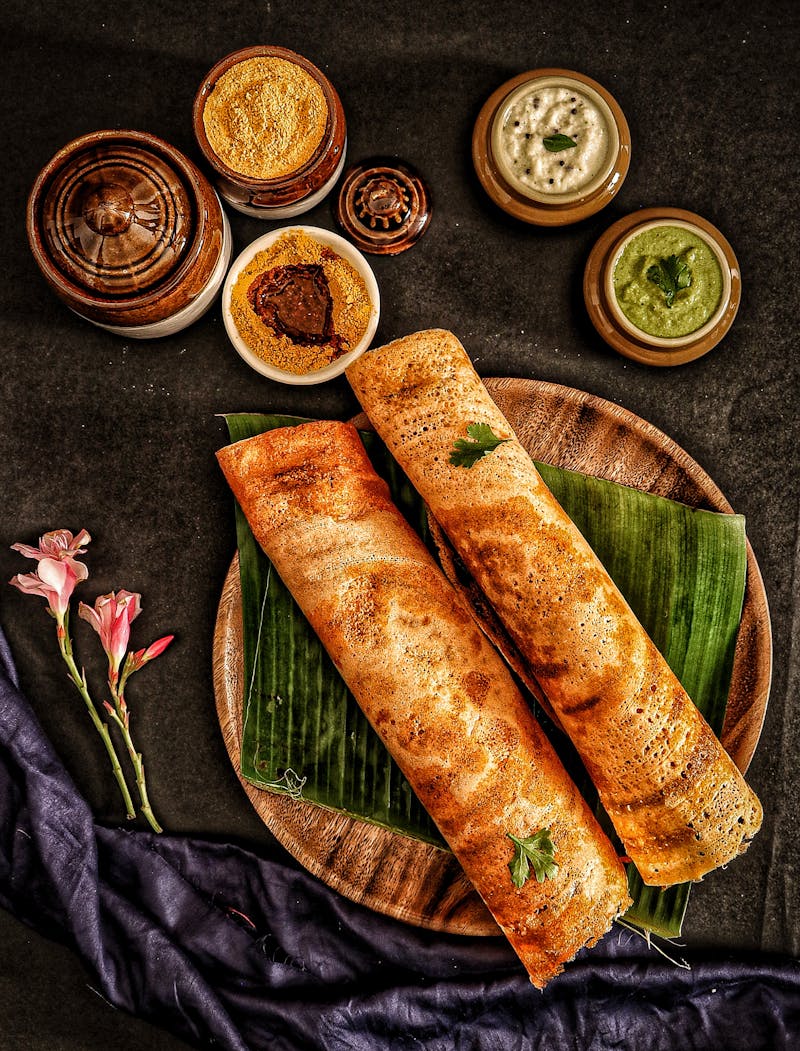
Masala Dosa
A crisp fermented rice-and-lentil crepe folded around spiced potato. Served with sambar and three chutneys.
Mumbai
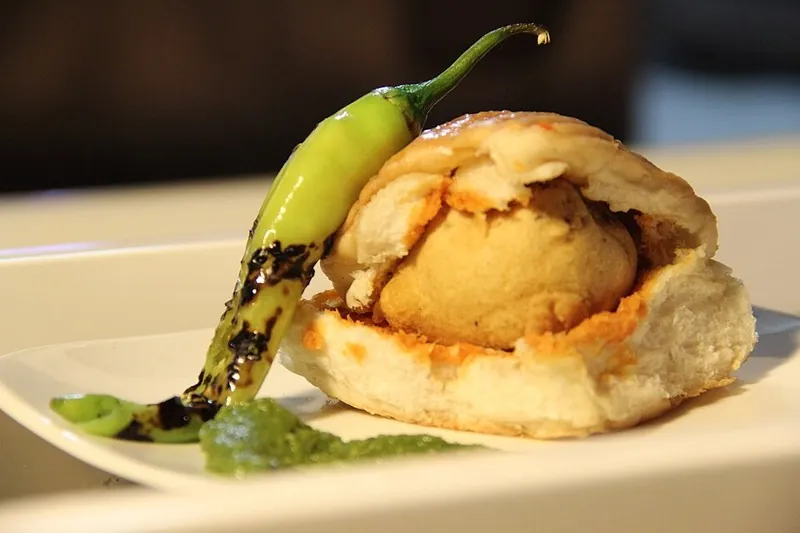
Vada Pav
Mumbai's beloved street burger, spiced potato fritter in a soft bun with chutneys. ₹20. Every corner.
Pan-India
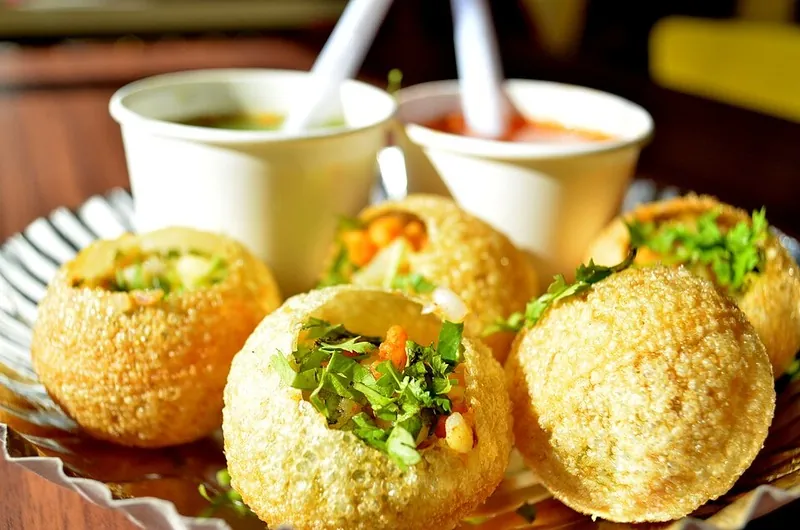
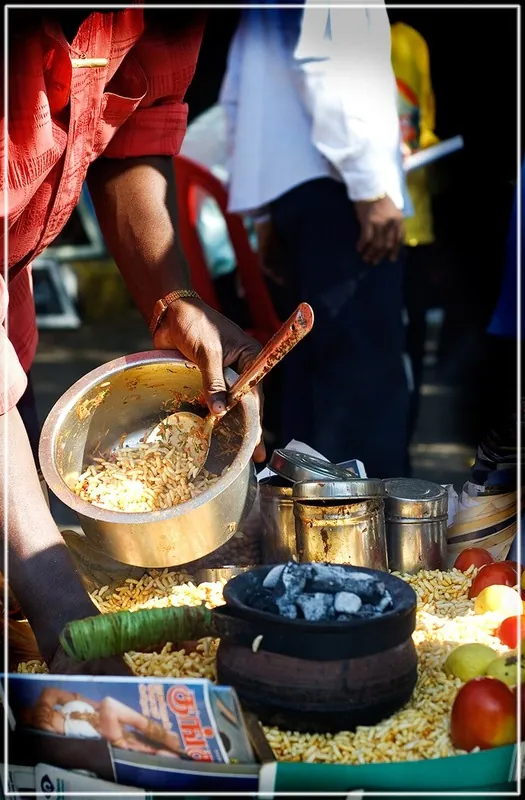
Pani Puri / Golgappa
Hollow crispy shells filled with spiced tamarind water. Different name in every city. India's most addictive snack.
North India
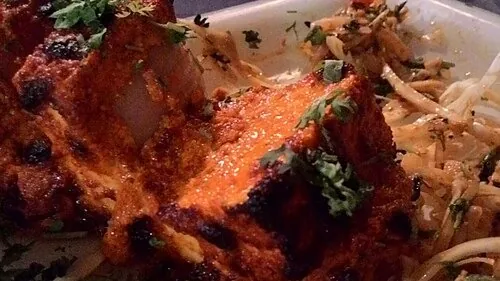
Paneer Tikka
Cubes of fresh cheese marinated in yogurt and spices, grilled in a tandoor. The vegetarian's tandoori.
Punjab
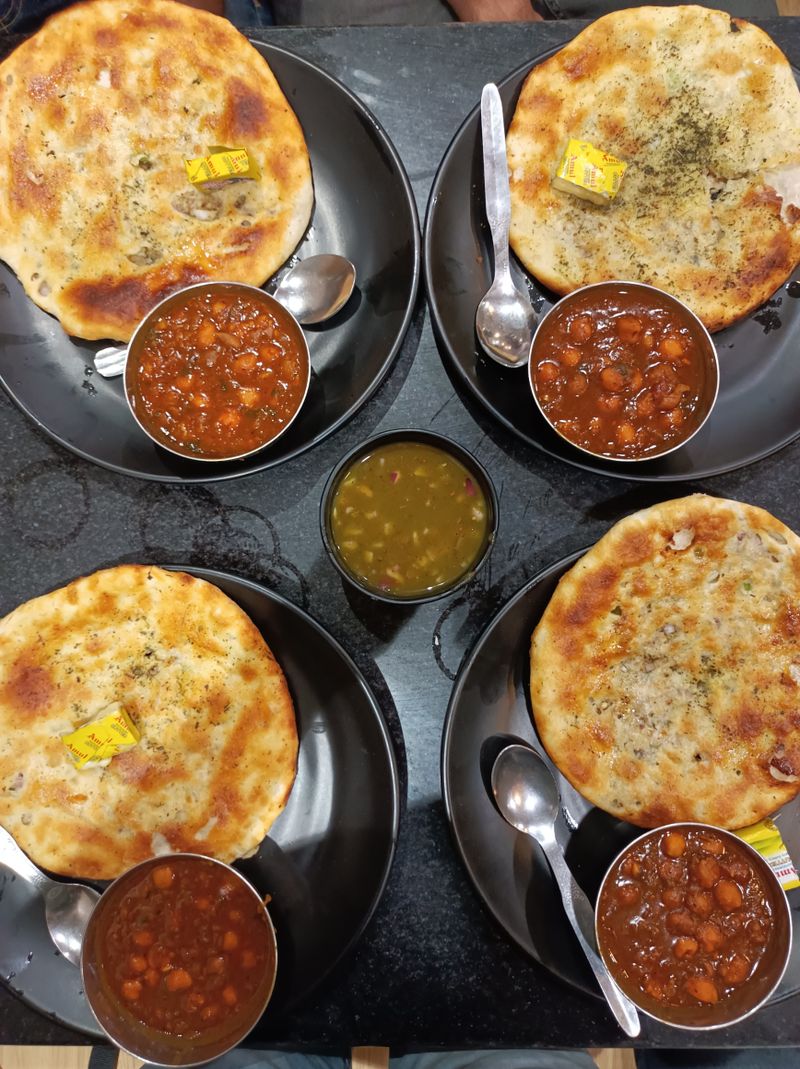
Chole Bhature
Spiced chickpea curry with deep-fried fluffy bread. Best for late breakfast. A North Indian Sunday institution.
Goa / Bengal
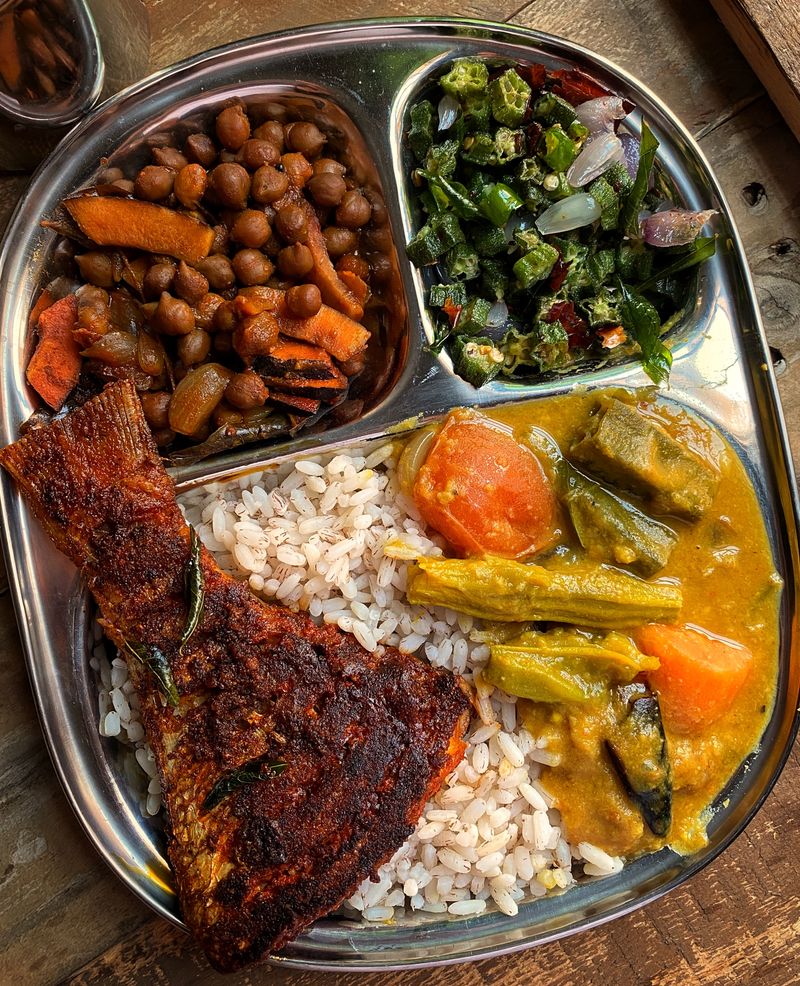
Fish Curry & Rice
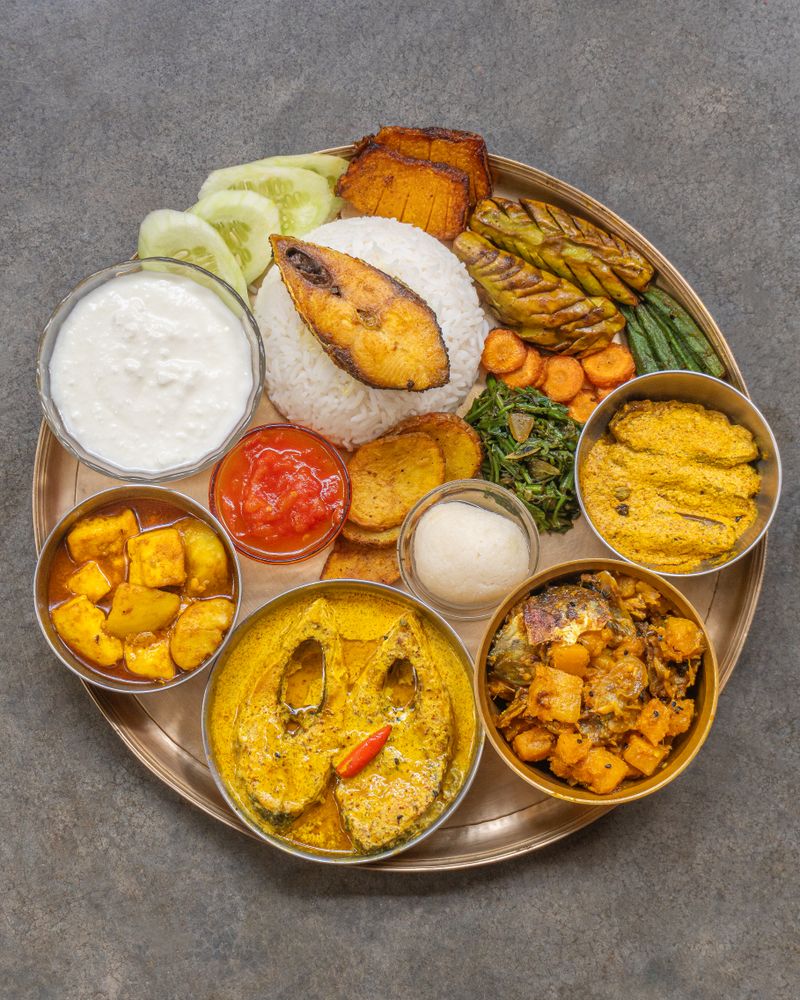
The coastal staple. Coconut-based in Goa and Kerala; mustard-based in Bengal. Always with rice. Always fresh.
Pan-India
Chaat (Bhel · Sev Puri · Aloo Tikki)
India's family of savoury snacks: sweet, sour, crunchy, spicy all at once. A craft, not a recipe.
Gujarat / Rajasthan
Thali
A round platter of 6-15 small portions: dal, sabzi, curry, rice, roti, raita, pickle, sweet. Unlimited refills. The complete meal.
East & North
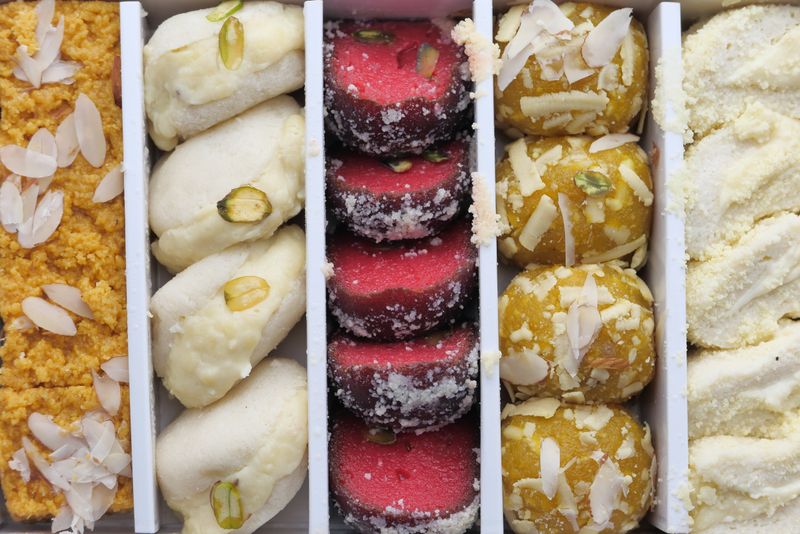
Mithai (Indian sweets)
Rosogolla, gulab jamun, jalebi, sandesh, kaju katli, ladoo, barfi. Gift them; receive them; eat them at every celebration.
Pan-India
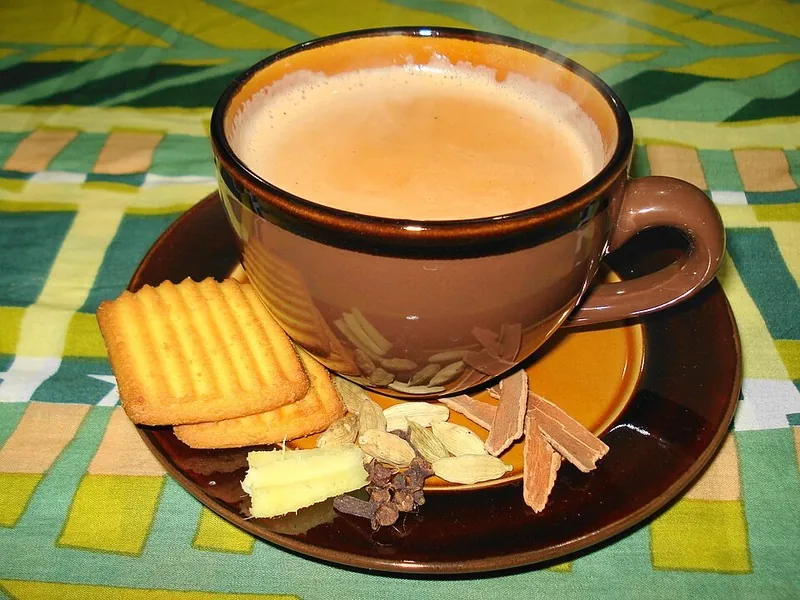
Masala Chai & Filter Coffee
Chai, spiced milk tea, India's national drink. Filter coffee, the South's foamy, frothy ceremony. Order both; pick your tribe.
🌱Vegetarian by default
India has the world's largest vegetarian population, an estimated quarter to a third of the country never eats meat. Many more eat vegetarian on certain days of the week. Restaurants always mark ● for veg and ● for non-veg on menus. Many homes and entire neighbourhoods (Jain-heritage areas of Mumbai, Gujarati colonies) are strictly vegetarian.
Jain dietary practice goes further still, no root vegetables (onion, garlic, potato), no eggs. A common consideration when hosting.
🐄What's restricted, where
Beef, legally restricted or banned in Maharashtra, Gujarat, Delhi, UP, MP, Rajasthan, Haryana and others. Available in Kerala, Goa, the North-East, Karnataka, West Bengal. Always check.
Pork, not served in Muslim-owned restaurants or homes. Common in Goa, the North-East and Christian-majority pockets of Kerala.
Alcohol, mostly available but with state-by-state rules. Gujarat and Bihar are dry states. Most cities have "dry days" on major holidays (Gandhi Jayanti, Republic Day, Independence Day).
💧
Water and the new arrival's stomach: Drink only bottled, boiled or RO-filtered water for the first 3-6 months. Brush teeth with bottled water initially. Avoid ice unless you're certain of its source. Start with cooked, hot, busy-restaurant food, street food can wait until your gut has acclimatised. Carry ORS sachets on early travel; for any antibiotics or anti-inflammatories, please carry only what your doctor has prescribed.
08
Sound, screen & sport
Arts, music & entertainment
Bollywood & the regional cinemas · Classical music · Dance · Sport · Literature
Cinema, Music, Sport
A culture that sings, dances, plays cricket · in that order.
India produces more films, more music and watches more cricket than any other country on earth. Engaging with even one of these shortens the social distance enormously.
Cinema · not just Bollywood
India produces 1,800+ films a year across 20+ languages, among the highest film output of any country. "Bollywood" is one of nine major film industries; the south's films now routinely outsell their northern counterparts globally.
🎬Bollywood
Hindi cinema · Mumbai
The world's most prolific film industry, song-and-dance, melodrama, family epics. Names everyone knows: Shah Rukh Khan, Aamir Khan, Salman Khan, Deepika Padukone, Alia Bhatt.
🎥Tollywood & Kollywood
Telugu & Tamil · South India
Bigger-budget action spectacles. Baahubali, RRR, KGF, Pushpa were all South Indian films. Stars: Rajinikanth, Allu Arjun, Prabhas, Mahesh Babu.
🎞️Regional cinemas
Malayalam · Bengali · Marathi · Kannada
Often the most artistically respected. Malayalam cinema is having a global moment; Bengali cinema gave us Satyajit Ray; Marathi cinema is quietly excellent.
📺Streaming
OTT in India
Netflix, Amazon Prime, JioHotstar, Sony LIV, Zee5. Indian originals: Sacred Games, Family Man, Delhi Crime, Made in Heaven, Panchayat.
Classical music & dance
Two great parallel traditions with deep, centuries-old roots.
🎵Hindustani · the Northern tradition
Sitar, sarod, tabla, bansuri (flute), sarangi, santoor. Built around ragas (melodic frameworks) and taals (rhythmic cycles), often improvised live for hours. Pandit Ravi Shankar, Ustad Zakir Hussain, Bismillah Khan, Hariprasad Chaurasia.
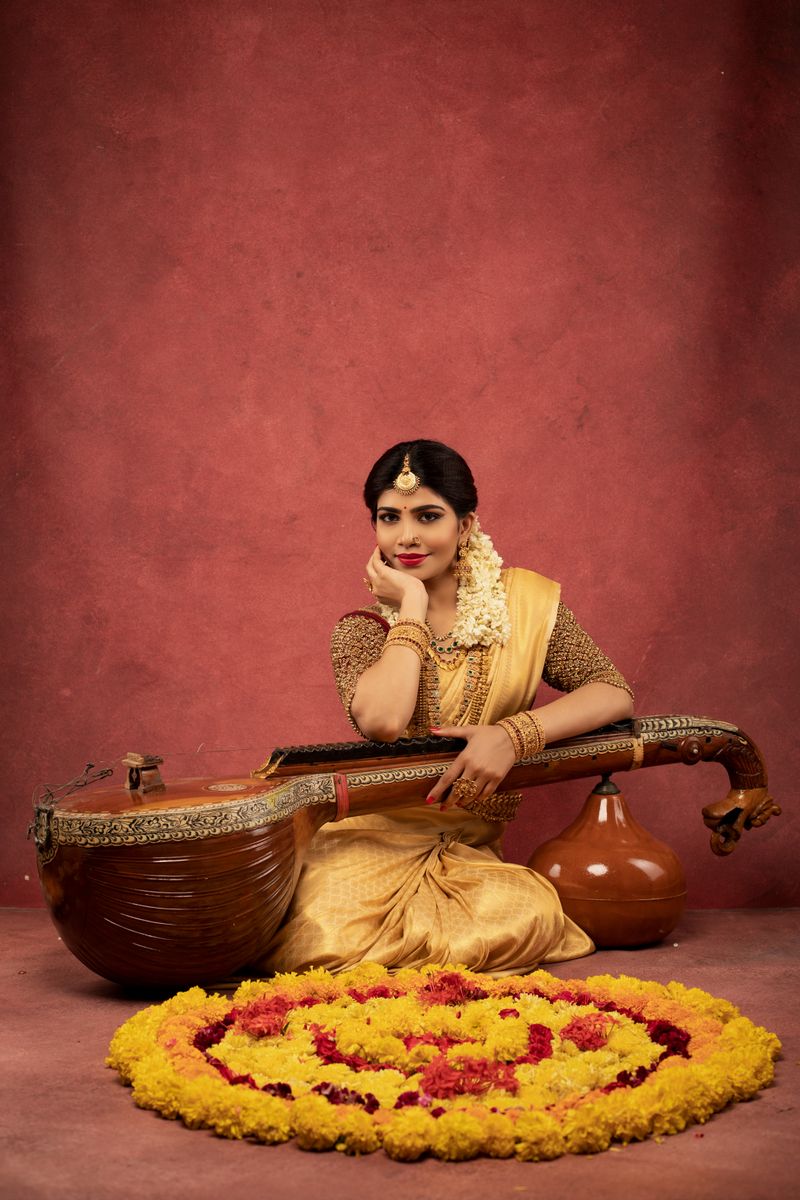
🎶Carnatic · the Southern tradition
Voice-led; veena, mridangam, ghatam, violin. More compositional, less improvisational. The Chennai December Music Season is among the world's largest classical music festivals, 1,500+ concerts over several weeks. M.S. Subbulakshmi, T.M. Krishna.
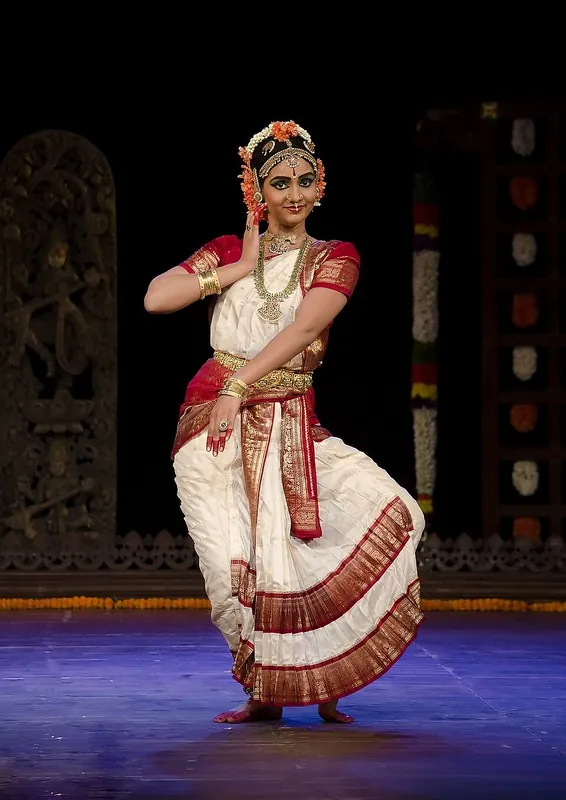
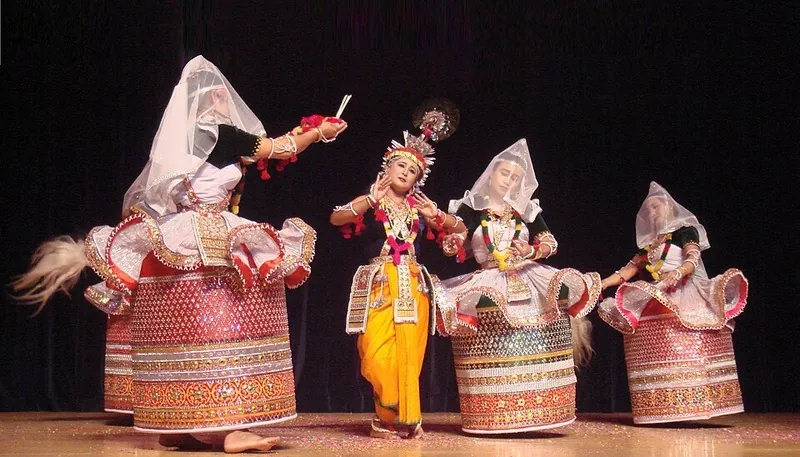
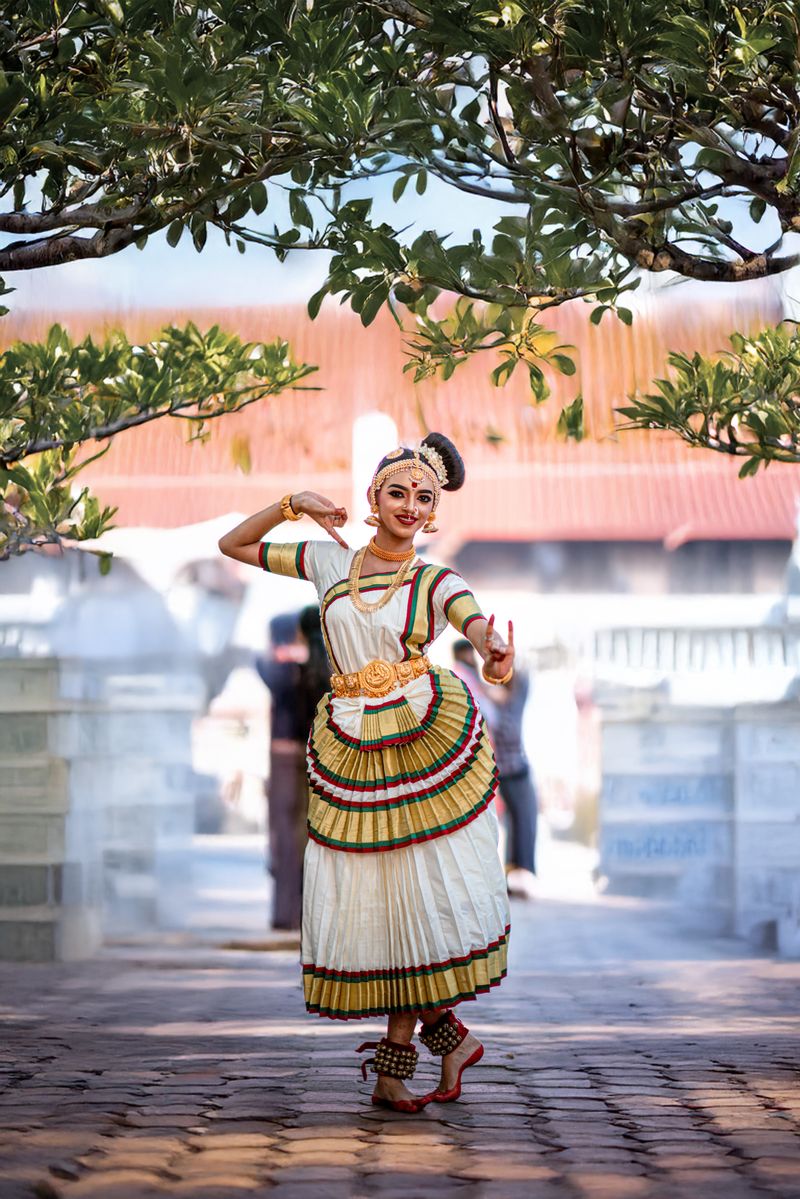
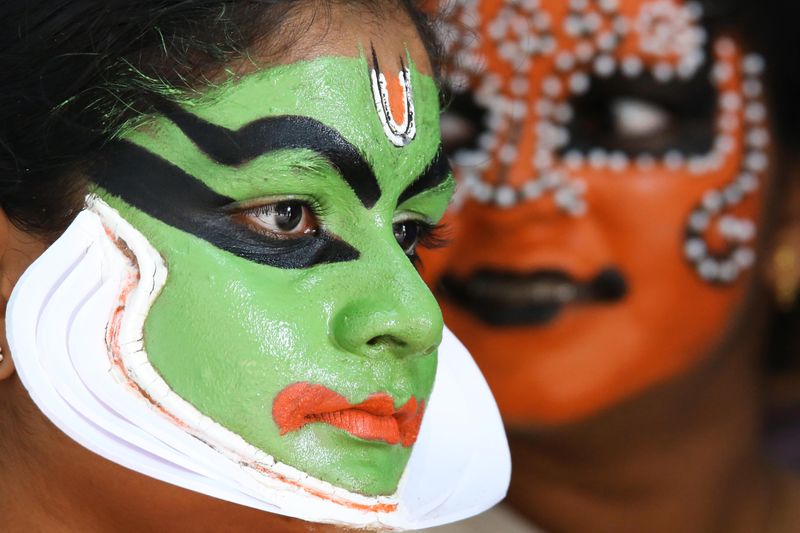
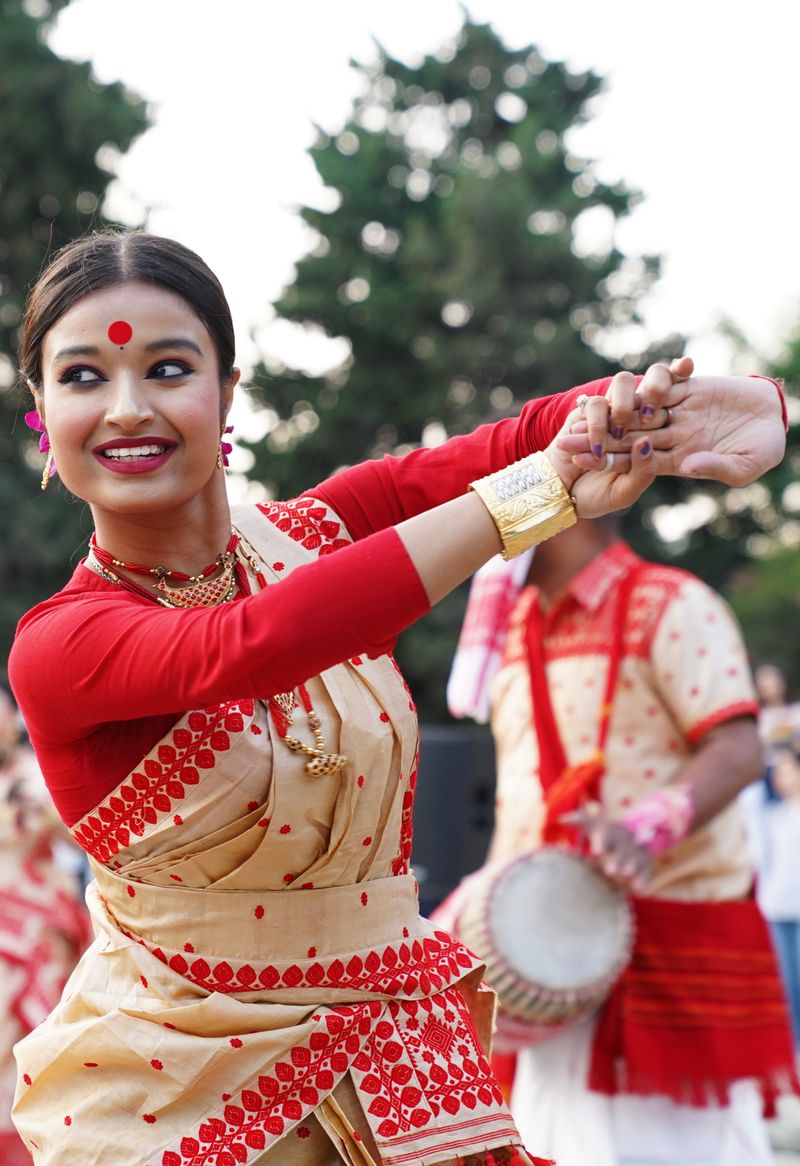
The eight classical dance forms
Each Indian classical dance is its own visual language, the costume, the makeup, the hand-gesture vocabulary (mudras) and the rhythm cycle differ entirely from one to the next.
Bharatanatyam
Tamil Nadu
The oldest of the eight. Sculptural poses, sharp rhythms, devotional themes. Crimson silk sari, gold jewellery, jasmine in the hair.
Kathak
North India
Storytelling through pirouettes and intricate footwork. Mughal-court refinement, ankle bells (ghungroo), Hindu & Sufi narratives.
Odissi
Odisha
The signature tribhanga (three-bend) posture. Sensual, sculpted, temple-rooted. Silver jewellery on red-and-gold silk.
Kuchipudi
Andhra Pradesh
Speedy footwork & dance-drama. The signature feat: dancing on the rim of a brass plate while balancing a pot of water on the head.
Manipuri
Manipur
Gentle, devotional, Krishna-centric. Distinctive cylindrical kumil skirt and round-bell embroidered veil. No facial expression in the male form.
Mohiniyattam
Kerala
Lyrical, swaying movement. The "dance of the enchantress", always in cream-white with gold-bordered Kerala sari, jasmine in hair.
Kathakali
Kerala
The vast green-faced makeup (pacha vesham) is unmistakable. Towering headgear, layered costumes, all-night dance-dramas of the Mahabharata.
Sattriya
Assam
The youngest of the eight, born in Assam's satras (Vaishnav monasteries). Narrative, devotional, only formally recognised as classical in 2000.
Sport · cricket is religion
🏏Cricket
India is consistently among the world's top-ranked sides in Test, ODI & T20 cricket, and won the 2024 T20 World Cup. The Indian Premier League (IPL), March to May each year, is the world's richest cricket league and the most-watched sporting event in India by a long margin.
The 2025 IPL on JioHotstar drew record online viewership, among the most-watched sporting streams anywhere (reach figures vary by source). Pick a city team and you'll have an instant conversation with every cab driver, colleague and security guard for two months.
⚽Football, hockey & kabaddi
Football is enormous in Kerala, Bengal, Goa and the North-East. The ISL (Indian Super League) draws strong crowds. Field hockey is long regarded as India's national sport (India has no officially declared national sport), with 8 Olympic gold medals, more than any other country in the sport.
Kabaddi (K-A-B-A-D-D-I), the indigenous wrestling-tag sport with ancient origins, is uniquely Indian. The Pro Kabaddi League is India's second-most watched televised league after the IPL, with 200M+ viewers per season.
🏸Badminton, tennis, chess
India has world champions across all three. Chess in particular, D. Gukesh became the youngest ever World Chess Champion at 18 in December 2024, defeating China's Ding Liren to become India's second world champion after Viswanathan Anand. India now has 85+ chess Grandmasters (up from only a handful in 2000), among the largest pools in the world.
The IPL conversation starter: If you arrive between late March and late May and your office is glued to mobile screens after 7pm, that's the IPL. Pick a team based on the city you live in (Mumbai Indians, Royal Challengers Bengaluru, Chennai Super Kings, Delhi Capitals, etc.), you'll have instant common ground with every cab driver, colleague and security guard for two months.
09
India's Expat Map
Major cities & where expats live
Mumbai · Delhi-NCR · Bengaluru · Hyderabad · Chennai · Pune · Kolkata · Ahmedabad · Chandigarh
The Nine
Nine cities, nine distinct lives.
India's expat experience varies sharply by city. Each metro has its own personality, pace, industries and rhythm. Below is a brief character sketch, your IKAN consultant will share the detailed destination guide for your assignment city separately.
9
Major Expat Hubs
Profiled across four regions
60+
International Schools
IB · IGCSE · American · British
25+
JCI-Accredited Hospitals
Across all major metros
30+
International Airports
Plus 130+ domestic airports nationwide
Interactive map
IKAN across India · tap a city for its guide
Every marker is labelled; tap a city to open its IKAN destination guide.
Tap any city for its IKAN destination guide.
Quick navigator
Click any city for a 30-second snapshot
Nine expat hubs across four regions. Tap a city to read the character sketch, jump to the full profile or compare on the fly.
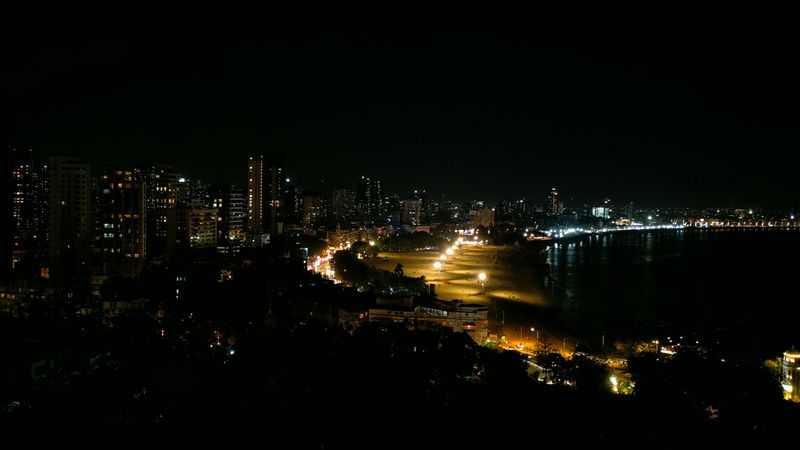
India's most cosmopolitan city: the BSE, Bollywood, the country's wealthiest districts and largest expat population. Fast, sea-facing, never sleeps. Tropical climate; dramatic monsoon. Expat clusters: Bandra West, BKC, Worli, Powai, Juhu.
Sea viewsHigh pacePremium cost
Delhi-NCR
Political capital · Mughal heritage · Corporate
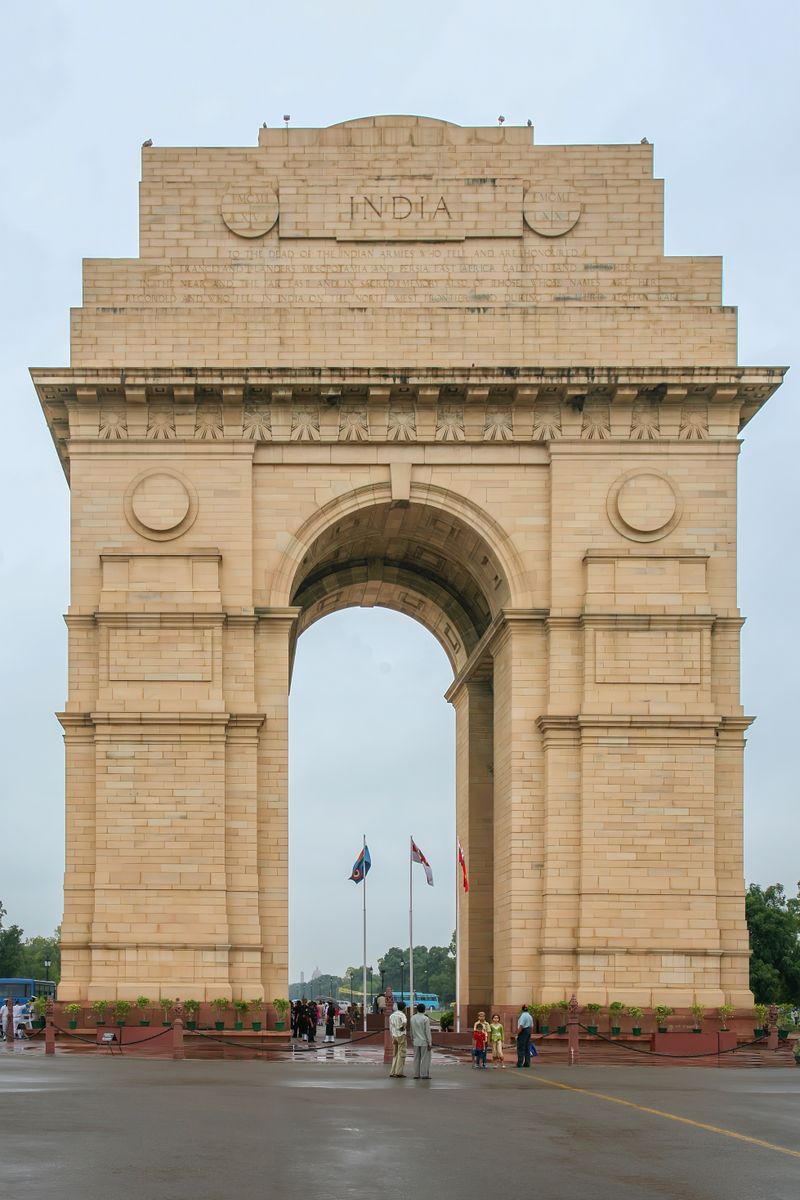
The seat of government, history and Mughal grandeur. Gurugram (formerly Gurgaon) is India's corporate engine: gleaming towers, malls, one of Asia's largest expat communities. Extreme seasons; air-quality challenge in winter. Expat clusters: Chanakyapuri, Vasant Vihar, Golf Links, Jor Bagh, Gurugram Golf Course Road.
HeritageCorporate hubWinter AQI
Bengaluru
India's Silicon Valley · Tech · Garden City
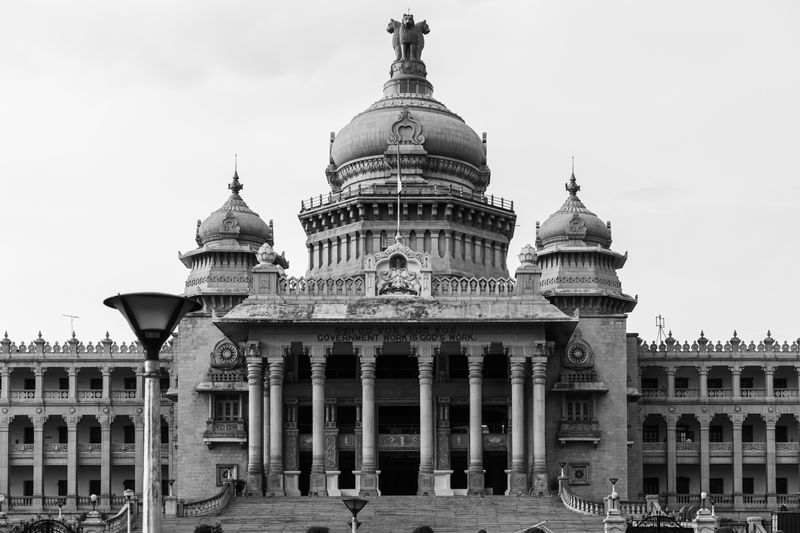
The tech powerhouse: Google, Amazon, Flipkart, Infosys, and 13,000+ startups. India's best year-round climate at 20-28°C. Progressive, cosmopolitan, outstanding food and craft-coffee scene. Traffic is the lone caveat. Expat clusters: Indiranagar, Koramangala, Whitefield, Sarjapur.
Best climateTechTraffic
Hyderabad
Pharma · Tech · Nizami heritage
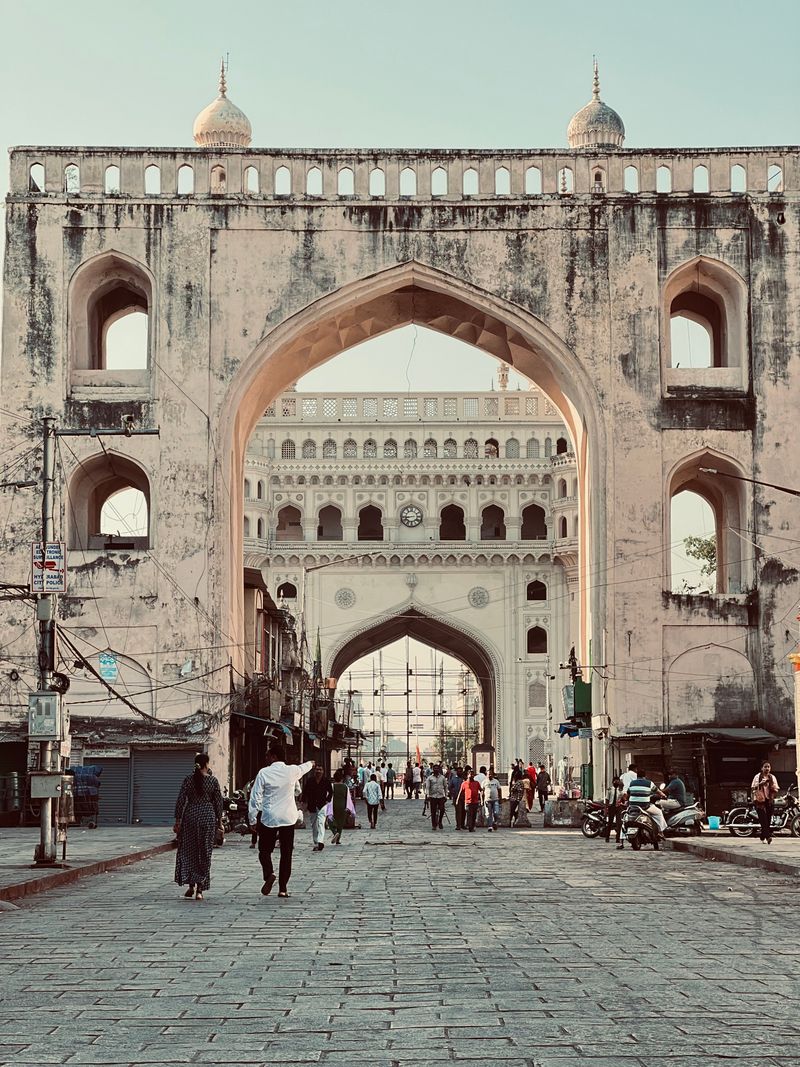
India's fastest-growing major tech city, offering exceptional quality of life. HITEC City rivals Bengaluru for tech density. Rich Nizami heritage, world-famous Hyderabadi biryani, welcoming pace. Expat clusters: HITEC City, Gachibowli, Jubilee Hills, Banjara Hills.
Quality of lifeHeritage foodFast-growing
Chennai
Auto capital · Cultural · Coastal
India's automotive capital and a major port city. Strong Tamil culture, one of India's longest urban beaches at Marina, and a well-established Japanese, Korean and European expat community from the auto industries. Hot and humid; coastal breeze helps. Expat clusters: Adyar, Nungambakkam, OMR, Anna Nagar.
Auto industryBeach cityCultural depth
Pune
Education · Manufacturing · Café culture
The "Oxford of the East": nine universities, a massive young population, excellent weather and an enviable quality of life that draws corporate and academic expats alike. Koregaon Park is Pune's answer to Bandra. Three hours from Mumbai by expressway. Expat clusters: Koregaon Park, Kalyani Nagar, Baner.
Great climateYouthfulMumbai-adjacent
Kolkata
Bengal · Literature · Trams & tea
India's intellectual and artistic capital. Colonial-era boulevards, the world's most celebrated Durga Puja, fish-and-rice culture, and one of the last Indian cities to run heritage trams (a network now largely discontinued). A slower, more soulful India for those who choose it. Expat clusters: Alipore, Ballygunge, Salt Lake.
Cultural soulAffordablePace: slow
Ahmedabad
Gujarat · Industry · UNESCO heritage
The commercial capital of Gujarat: manufacturing, pharma, textiles. India's first UNESCO World Heritage City. Strict vegetarian-Jain food culture. A dry state, so no public alcohol. Increasingly relevant to families relocating for chemicals, pharma and renewable energy roles.
HeritageVegetarianDry state
Chandigarh
Planned city · North · Capital of two states
India's first planned city, designed by Le Corbusier. Wide tree-lined boulevards, low pollution, excellent quality of life. The administrative capital of both Punjab and Haryana. Often called India's cleanest, greenest city.
Le CorbusierClean & greenModern
A note from IKAN
Detailed cost-of-living, neighbourhood and housing data for each city is delivered in your city-specific IKAN destination guide. The character sketches above are intended as orientation only, the right neighbourhood depends on the office location, school choice, school commute and family stage. Your IKAN consultant will work this through with you.
10
Day-one orientation
Living essentials
Housing · Banking · SIM & data · Transport · Utilities · brief overview only
Quick Orientation
How daily life actually works.
A high-altitude overview, just enough to walk into your first week informed. Full procedural detail (FRRO, PAN, leasing, Form C, TDS, utilities) sits inside the destination-services workbook your IKAN consultant delivers separately.
Scope note
This section is intentionally short. The detailed immigration, leasing, schools-placement, banking and settling-in playbook is your IKAN destination services document, it covers the same topics with the procedural depth, timelines and red-flag annotations that this cultural guide is not designed to carry.
🏠Housing
Indian rentals are mostly unfurnished in modern gated communities with security, lifts, pools, gyms. Leases are typically 11, 24 or 36 months with a security deposit of 3 to 10 months' rent.
Start the search 45 to 60 days before move-in. Brokerage is one to two months' rent. Stamp duty and registration are mandatory for leases over 11 months in many states.
IKAN manages the full home-finding process, shortlist, viewings, due diligence, negotiation, registration.
🏦Banking & money
Recommended banks: HDFC, ICICI, HSBC, Standard Chartered, Kotak Mahindra, Axis. Account opening requires PAN card and FRRO registration; takes 7 to 10 working days. Net banking, debit card and chequebook arrive in sequence.
UPI, India's Unified Payments Interface, is the world's most advanced retail payments rail. Once your bank account is live, install PhonePe, PayTM or Google Pay and you will rarely need cash again.
📱SIM / eSIM & mobile data
Indian SIM / eSIM can only be obtained after arrival in India. Two big networks: Jio (best 5G, best data plans) and Airtel (best voice quality, widest coverage). Vi is the third. Prepaid SIM requires passport + visa. Postpaid requires FRRO registration + local address proof.
Data is among the cheapest in the world, ₹250 to 400/month gets 1.5 to 2 GB/day. Keep the same number throughout your stay, all banking OTPs and digital identity rely on it.
🚇Getting around
Metro in Mumbai, Delhi, Bengaluru, Hyderabad, Chennai, Kolkata, Pune, Ahmedabad. Delhi Metro is the most extensive (390+ km). Uber, Ola work in every metro; Rapido bike-taxis are a game-changer in congested cities. Auto-rickshaws are everywhere, insist on the meter or agree the fare in advance.
Most expat families hire a full-time car and driver. Vastly easier than driving yourself in Indian traffic.
⚡Utilities at home
Electricity: 230V; prepaid meters are increasingly common in newer apartments. Top up via mobile app. Power back-up (inverter or society generator) is standard. Water: mostly society-managed. Install an RO purifier, do not drink tap water. Gas: piped (PNG) in newer buildings; LPG cylinders (Indane / HP / Bharat Gas / SuperGas) in older ones, IKAN helps register and schedule replacements. Internet: 100 to 1,000 Mbps fibre widely available at ₹700 to 2,500/month.
Initial set-up payments can be card/UPI, sometimes cash. Be prepared with a working payment method on day one.
🛂Immigration & compliance
Most international arrivals come on an Employment Visa (X visa for dependents). The critical sequence: Form C → online PAN application → FRRO registration (within 14 days) → physical PAN → Bank account.
Full procedural detail is in the IKAN destination services document. Do not attempt this alone, the dependencies are unforgiving.
💡
The first-week shopping list: Airtel or Jio SIM · bottled water for one week · mosquito repellent (Good Knight Liquid + Odomos cream) · an Indian power-strip with surge protection · ORS sachets · a sleep mask for early sunrises · a roomy umbrella in monsoon season · cash in ₹100 and ₹500 notes.
11
Healthcare
Hospitals & medical care
Private system · JCI-accredited hospitals · Insurance · Pharmacy
Medical Care
India runs one of the world's most capable private healthcare systems.
Major private hospitals across India offer JCI-accredited facilities, English-speaking staff, international insurance acceptance and globally-trained specialists, at a fraction of OECD costs. The public system is improving but expats should default to private care. Hospital names, direct lines and cost figures here are indicative, confirm current details before relying on them.
25+
JCI-Accredited Hospitals
Across major metros · indicative
~12%
Of US healthcare cost
For equivalent procedures & quality (indicative)
24/7
Pharmacy delivery
via 1mg, PharmEasy, Apollo 247
Trusted private hospitals across India
A working list of the most-used hospitals for the international family community. Your IKAN consultant will tailor city-specific recommendations, including paediatric, maternity and speciality referrals, in your settling-in pack.
Carry comprehensive private health insurance that includes inpatient, outpatient, dental, maternity and medical evacuation. Confirm your insurer's cashless-network includes the hospitals above.
Top international insurers operating in India: Cigna, AXA, Allianz Care, Bupa Global, Aetna International. Local options: Niva Bupa, HDFC ERGO, Star Health, ICICI Lombard.
💊Pharmacy & everyday care
Pharmacies are everywhere, Apollo Pharmacy, MedPlus, Wellness Forever are dominant chains. 1mg, PharmEasy, Apollo 247, Tata 1mg deliver medicines, schedule lab tests and offer video consultations.
Most common medications are sold over the counter at a fraction of Western prices. Always ask for the printed bill and check expiry dates.
🏥
The first-week health checklist: Identify the closest hospital to your home and another close to your office. Save their emergency lines in your phone. Keep your insurance card, allergy list and blood group as a photo on your phone and your spouse's phone. Register on Practo to find vetted GPs near you. Consult your home-country doctor before moving about precautionary Hepatitis A, Typhoid and Tetanus boosters or any other pre-departure vaccinations.
12
Schools & Universities
International education
IB · IGCSE · American · British · Indian boards · Apply early
For Families
World-class schools · apply early.
India's top international schools compare well internationally, with deep IB, IGCSE, American and British curricula. The schools named below are a representative sample, not an exhaustive list, several profiled cities (Ahmedabad among them) have strong options beyond those shown. The single most important fact: waitlists are real for the leading schools. Apply 6 to 18 months ahead of move-in where possible.
School
City
Curriculum
Notes
American Embassy School (AES)
New Delhi
AmericanIB
The premier American school in India. Priority for US-government families. Long waitlist.
The British School
New Delhi
IGCSEIB
The established British community school. Strong academics across the board.
Pathways World School / Pathways Aravali
Gurugram · Aravali
IB · CIE
Premier IB schools in Delhi-NCR with strong international acceptance.
DPS International
Delhi-NCR
IBIGCSE
Multiple campuses; strong reputation; good fit for Indian-origin returning families.
The Japanese School (Nihonjin Gakkō)
New Delhi (Dwarka)
Japanese MEXT
MEXT-curriculum school operated by the Japanese expat community. The default choice for Japanese families relocating to Delhi.
Lycée Français International de Delhi
New Delhi (Chanakyapuri)
French AEFE
Accredited French school in the diplomatic enclave. Curriculum runs from Maternelle through Terminale, with the French Baccalaureate.
American School of Bombay (ASB)
Mumbai (BKC, Juhu)
AmericanIB
Gold standard for US families in Mumbai. 1,200 students. Apply 12-18 months ahead.
Dhirubhai Ambani International (DAIS)
Mumbai (BKC)
IB DPIGCSE
Central BKC location. Outstanding science and arts. UK/US university placement.
Singapore International School
Mumbai (Powai)
Singapore MOE
Ideal for Singapore-India transfers. Strong in the Powai tech corridor.
The Japanese School (Mumbai)
Mumbai
Japanese MEXT
MEXT-curriculum school for Japanese expat families based in Mumbai. Strong cultural and language continuity for returning students.
The International School Bangalore (TISB)
Bengaluru
IBIGCSE
Large campus, residential boarding available, strong sports programmes.
Canadian International School
Bengaluru
IBCanadian
Premier IB World School in the city. Strong North-American community.
Indus International School
Bengaluru · Pune · Hyderabad
IBIGCSE
Multi-city IB chain with consistent quality and boarding options.
Stonehill International School
Bengaluru (Tarahunise)
IB
One of Bengaluru's leading IB World Schools. Day & boarding, expansive 33-acre campus, strong UK/US university placement.
Harrow International School Bengaluru
Bengaluru
BritishIB
The Indian campus of one of the UK's most storied schools. Premium British curriculum and boarding.
Oakridge International
Hyderabad · Bengaluru · Mohali
IBCambridge
Top expat choice in Hyderabad. Outstanding campus, Nord Anglia network.
International School of Hyderabad (ISH)
Hyderabad (ICRISAT campus)
IBAmerican
Long-established not-for-profit international school inside the ICRISAT campus. Strong international community across 40+ nationalities.
New York Academy
Hyderabad
AmericanIB
American-curriculum school with growing reputation for STEM, sports and personalised learning.
Aga Khan Academy
Hyderabad
IB
Part of the global Aga Khan Academies network. Full IB continuum (PYP, MYP, DP), residential boarding from Grade 7, strong emphasis on pluralism and service learning.
American International School Chennai (AISC)
Chennai
AmericanIB
The American school for the Chennai expat auto-industry community.
The British International School Chennai
Chennai
IGCSEIB
Modern facilities; growing British-curriculum community.
Mercedes-Benz International School
Pune
IB
Pune's premier international school; sponsored by Mercedes-Benz India.
Mahindra International School
Pune
IBIGCSE
Full IB World School with PYP / MYP / DP, one of Pune's most established international schools, with strong corporate and diplomatic family enrolment.
Wellington College International
Pune
BritishIB
The Indian campus of the UK's Wellington College. Premium British curriculum, day & boarding, strong leadership programme.
Calcutta International School
Kolkata
IGCSEIB
Long-established expat school in Kolkata.
🎓
IKAN School Placement: Your IKAN consultant will provide a tailored shortlist matched to the child's age, prior curriculum, neighbourhood, school commute and assignment duration. We arrange school tours and follow up on waitlists wherever permitted. Important: most schools require parents to complete an online application before they will arrange first discussions, a tour or visit, please start this as soon as you can. IKAN consultants will then follow up based on your submission.
Part II · Settling In
The operational half · compliance, leases, day-to-day, departure.
The next chapters are the working playbook for you and your family on the ground in India. They sit alongside the cultural section above so the whole picture lives in one place. Your IKAN consultant owns the execution of every step described here.
13
The first 14 days
Compliance essentials
Visa · Form C · FRRO · PAN · SIM · Bank · The PAN-FRRO stalemate
Compliances Overview
The legal & administrative scaffolding of your move.
India's compliance system for foreign nationals is comprehensive, digital and unforgiving of order errors. The good news: IKAN's consultant has run this sequence hundreds of times and will guide you step-by-step. Below is the full picture so you know exactly what is being managed on your behalf.
Critical first principle · one step unlocks the next
Opening a bank account requires a PAN. Applying for the PAN requires your FRRO registration. FRRO requires a Form C from your accommodation. Each step depends on the one before it. Your IKAN consultant manages this dependency cycle, do not attempt to run it in parallel.
The correct step order
01
Form C
Filed by your hotel / serviced apartment within 24 hours of arrival.
→
02
FRRO registration
Register on the e-FRRO portal using the Form C, within 14 days of arrival, at your temporary accommodation address.
→
03
PAN application
Once the FRRO Residential Permit is issued, apply via the official NSDL / Protean portal, using the RP as identity and address proof.
→
04
Bank account
Use the PAN acknowledgement and the FRRO RP to open your Indian bank account per the bank's regulatory KYC process. Submit the physical PAN once received.
→
05
Permanent address update
After signing your lease, your landlord files a fresh Form C; then notify FRRO of the change of address.
Form numbers and online portals are periodically updated by the Government of India. Your IKAN immigration team verifies the live versions for every move.
Documents to carry · before you fly
📘Visa & employment
Long-term Employment Visa or Entry (X) Visa for dependents, valid for the full assignment plus margin. Contract and Appointment Letter from your sponsoring Indian entity. Company Undertaking Letter on letterhead.
📸Photographs
Always travel with 15 to 20 passport-sized colour photographs on a plain white background for every family member, plus the digital versions on your phone. They are required constantly: FRRO, PAN, SIM, bank, school admissions, gym memberships and society passes all want them.
📑Personal & family
Identity and address proof from your home country. Apostilled or legalised marriage certificate, and birth certificates for every dependent child. Most consulates require apostille, do this before you fly.
📝FRRO
The Foreigners Regional Registration Office, your Residential Permit (RP) and Registration Certificate (RC). Required within 14 days of arrival for registration-endorsed visa classes (employment, student, dependant, medical, research, missionary); other long-stay visas must register before completing 180 days.
🆔PAN
The Permanent Account Number, your 10-digit tax identity. Required to open a bank account, file taxes, sign large leases, or buy a vehicle.
📄Form C
Online notification to the Government of India of where you are staying, filed by your hotel, serviced apartment or landlord. Prerequisite for the FRRO.
India visa types · the working catalogue
India operates one of the world's most granular visa systems, 15+ visa categories with different validities, work rights and extension paths. Choosing the wrong category at the consulate creates downstream FRRO and tax problems that take months to unwind. Below is the working catalogue your IKAN consultant will reference for your assignment.
Visa type
Who it's for
Validity
Work rights
FRRO?
Employment (E) Visa
Foreign nationals employed by an Indian company or MNE earning above USD 25,000/yr (some exceptions). The primary visa for international employees.
Up to 5 years, multi-entry
Yes, for sponsoring employer only
Mandatory within 14 days of arrival
Entry (X) Visa
Dependents (spouse, children, parents) of E-Visa holders. Also for persons of Indian origin not eligible for OCI.
Same as principal (up to 5 yrs)
No work, can study, volunteer
Mandatory alongside principal
Business (B) Visa
Short-term commercial activity, meetings, negotiations, factory visits, recruitment. Not for employment.
1-10 years, multi-entry, each stay max 180 days
No salaried work
Before completing 180 days (aggregate stays count)
e-Visa
Citizens of 165+ countries for tourism, business, medical or conference. Applied online, no consulate visit. Single window e-Tourist / e-Business / e-Medical / e-Conference.
30, 60, 180 or 365 days depending on sub-type
None (except e-Business limited)
Generally not required
Project (P) Visa
Skilled personnel deployed for a specific power or steel sector project. Project-tied, not transferable.
1 year or project duration
Yes, project-specific
Mandatory
Research (R) Visa
Foreign academics, scholars and researchers affiliated with an Indian institution. Issued post Ministry of Education clearance.
Up to 5 years
Research only
Mandatory
Conference (C) Visa
Attending an international conference, seminar or workshop hosted by an Indian government/UN body.
Duration of conference + travel
None
Not required
Journalist (J) Visa
Foreign correspondents, media crew & documentary teams. Strictly regulated by MEA.
3 months single entry typical
Journalism only
Mandatory
Medical & Med-Attendant
Treatment at recognised Indian hospitals + one or two attendants. Increasingly digitised as e-Medical.
60 days, up to 3 entries
None
Mandatory within 14 days
Student (S) Visa
Foreign nationals enrolled in recognised Indian institutions. Co-terminus with course duration.
Course duration, up to 5 yrs
Internships allowed by host institution
Mandatory
Intern (I) Visa
Foreign nationals interning at Indian companies / NGOs. Stipend cap rules apply.
Up to 1 year
Stipendiary internship only
Before completing 180 days
Diplomatic / Official
Diplomats, government officials & their dependents on official assignment.
Assignment duration
Diplomatic mission only
Embassy-managed
OCI Card(not technically a visa)
Overseas Citizens of India, foreign nationals of Indian origin (up to 4 generations). Lifelong multi-entry status.
Lifelong, tied to passport
Yes, almost all jobs
Not required
Tourist (T) Visa
Pure tourism, sightseeing, visiting friends/family. Not for work, study or business.
30 days to 5 years (nationality dependent)
None
Before completing 180 days (long stays)
For international families relocating to India
In 99% of relocations, the right visa is the Employment (E) Visa for you and the Entry (X) Visa for dependents, both applied for at the Indian consulate in the home country before travel. IKAN's Immigration team coordinates with the sponsoring Indian entity to issue the invitation letter, salary certificate and Form-A documents required.
⚠️
Visa-category traps to avoid:
Don't enter India on a Business Visa with intent to take up employment, this is a common consulate trick that ends in cancellation. Always travel on the E-Visa from day one.
e-Visa is not employment-eligible, even e-Business sub-type does not permit a salaried role.
Tourist Visa holders cannot be paid in India, even for honoraria or consulting. RBI flags such inflows.
Multiple consecutive Business Visas aggregating >180 days in a calendar year trigger FRRO + exit-permit requirements, even if each individual stay is shorter (see real IKAN case below).
Visa extensions · staying beyond the original term
Most India visas are extendable from within India through the FRRO, provided the application is filed before the original visa expires and the assignment remains genuine. Below is what's possible by category.
🔄Employment (E) Visa extension
Granted in 1-year blocks, renewable up to a total stay of 5 years (sometimes extended further for senior roles).
Where: filed online via the e-FRRO portal at the FRRO with jurisdiction over your registered address. Typical TAT: 5 to 15 working days, no consulate visit required.
Documents: Current passport & visa, current FRRO RP/RC, fresh employer continuation letter, latest salary slips, updated employment contract, Form 26AS or tax filing proof, fresh Form C (current address), 4 passport photos.
👨👩👧Entry (X) dependent extension
Filed simultaneously with the principal E-Visa extension, it is co-terminus with the principal visa.
Spouse must include a fresh marriage certificate (apostilled if not already on file). Children require fresh birth certificates and a school continuation letter. Common pitfall: dependent visa applications sometimes lag the principal, file together to avoid out-of-status gaps.
💼Business Visa extension
Limited to cumulative 180 days per calendar year for most nationalities. Beyond this, applicants must either exit and re-apply, or convert to an Employment Visa.
Conversion from Business to Employment Visa is technically possible but generally requires exit, re-stamping in the home country, and fresh entry, IKAN strongly recommends planning this at least 60 days ahead.
🎓Student / Research / Project extensions
Extended for the duration of the course / research grant / project, with letters from the host institution or project authority. Project Visa extensions are tied to project completion certificates and may not exceed the original sanctioned project duration.
⏰
The 90-day rule: Commence the extension application process at least 90 days before the current visa expires. Most FRRO offices accept applications within 30 days of expiry; later than that and you risk penalties (indicative, around ₹15,000+), visa lapsing, or having a routine extension converted into an exit-and-reapply requirement, which means leaving India, applying afresh at the home-country consulate, and waiting weeks for re-stamping. Add a calendar reminder the day your RP is issued.
A case from IKAN's COE-VI immigration desk (illustrative; details anonymised)
A Japanese national working as Project Technical Head in rural Odisha entered India on a Business Visa. His visa stayed valid, but he inadvertently exceeded the aggregate 180-day stay in a calendar year without registering with the FRRO. He was stopped at the airport while trying to fly to Japan for business and barred from exiting until he obtained a Registration cum Exit Permit. IKAN's COE-VI task force completed the audit, drafted documents, set up the FRRO user account for his employer, lodged the application, deployed a representative physically to the FRRO office in Odisha, and obtained the certificate the same day. He flew as scheduled. Moral: Business-Visa aggregate-stay limits matter as much as any single trip.
Exit permit · when leaving India isn't automatic
🛂When you need one
An exit permit is required for any foreign national who has overstayed, not registered with FRRO when registration was mandatory, has a visa-violation flag, or whose FRRO Residential Permit has expired while still in country.
Also required at end-of-assignment if you are leaving permanently and want to formally close your FRRO record (the "no objection" exit notification).
⏱️How long it takes
Standard processing: 3 to 10 working days. Emergency same-day processing is possible at most major FRRO offices with IKAN intervention, valid travel reason and government fee & penalty payment.
Penalties for non-registration or overstay start with fines and can escalate to criminal prosecution, up to 3 years' imprisonment and/or a fine up to ₹3 lakh (confirm specifics with the immigration team), in addition to government fees. Repeat offences can trigger a multi-year India entry ban.
Form C · Accommodation registration
A mandatory notification to the Government of India / local police regarding a foreign national's stay at any premises. Critical prerequisite for FRRO registration. Filed by your accommodation provider, and only after check-in / move-in.
🏨Temporary accommodation
Applicable to hotels, guest houses and serviced apartments. The management of the establishment is responsible for filing Form C, usually automatic on check-in.
Provide correct passport and visa details at check-in. Always request a copy of the Form C filing for your records and onward FRRO use.
🏠Long-term housing
Applicable once you move into your permanent rented / leased residence. The landlord is responsible to file Form C online.
File as soon as possible after move-in. Required for securing your RP and for every change of residence during your stay. A copy of the filed Form C is mandatory for the FRRO Residential Permit application.
Beyond Form C: landlords are also required to report a new tenant and their antecedents to the local police station. You must cooperate to get this compliance completed.
🚩
Form C · red flags: Owners / landlords often aren't aware of this requirement, or are reluctant to make the effort. Owners can be hesitant to share the OTP needed to file (it lands on their phone). This is one of IKAN's most common compliance interventions, we educate landlords and walk them through the filing.
FRRO · Visa registration & Residential Permit
⏱️The 14-day rule
Registration must be completed within 14 days of arrival for visa classes carrying a registration endorsement: employment, student, dependant, medical, research and missionary visas (June 2026 amendment). Holders of other long-stay visas must register before completing 180 days in India. When in doubt, treat 14 days as the deadline. The clock starts the day you land.
The entire process runs online via the Bureau of Immigration portal at indianfrro.gov.in. Physical appearance is rarely required.
Upon approval you'll receive your Residential Permit (RP) and Registration Certificate (RC) digitally by email. Typical turnaround: 5 to 15 working days.
Physical verification: the FRRO office may also order a physical verification, a police officer could visit your residence to verify your antecedents. Cooperate fully.
📋Document checklist
✅ Original Passport & Visa
✅ Passport-sized photos (printed and digital)
✅ Employment Contract
✅ Company Undertaking Letter
✅ Valid Form C from your accommodation
✅ Proof of Residence
Change of address: The FRRO must be re-registered each time your residence changes in India. Build the schedule when you move from serviced apartment into a permanent lease.
🚩
FRRO · red flags: Multiple agencies sometimes handle parts of the process, causing handoff delays. Employer documentation can take longer than anticipated. Special visa notifications can complicate the application. A bank account cannot be opened without the FRRO, so any delay here cascades downstream.
PAN · Permanent Account Number
A unique 10-digit alphanumeric tax identity issued by the Income Tax Department of India. Essential for opening bank accounts, signing leases, purchasing vehicles, and filing tax returns.
🅰️Scenario A · Standard
Apply after receiving your FRRO Registration. This is the most straightforward path and the one your IKAN consultant will recommend by default.
Timeline: 15 to 20 working days for the physical card; e-PAN is issued sooner and received by email.
Exception: if the FRRO Registration is not available as proof of address, the employer's address may be used through an employer verification letter. This route is most commonly used for OCI cardholders.
🅱️Scenario B · Urgent
The application can be initiated with home-country documents (Driving Licence, Tax ID, etc.), but involves higher complexity and longer wait. Used only when the assignment timeline absolutely demands it.
📋Required documents
✅ Valid Passport copy
✅ Proof of local address (FRRO RP / RC)
✅ Recent passport-sized photographs
✅ Signed Application Form (Form 49AA)
⚠️Do NOT apply for an Aadhaar card
IKAN recommends that resident foreigners, unless they are OCI cardholders, do not seek an Aadhaar card unless absolutely necessary. Aadhaar will get linked to your PAN and lead to considerable challenges for foreign nationals. Defer the conversation with payroll, PAN alone is sufficient for almost every expat use case.
🚩
PAN · red flags: Sometimes handled by company payroll or a different agency, leading to coordination delays. A delay in PAN delays bank-account opening. Name mismatch across passport, visa, lease and PAN causes rejections. PAN is delivered to the address provided, if not accepted, it is returned and a fresh application is required. OCI cardholders face additional challenges around government-issued ID and address proof.
Staying connected · your mobile number
📱Temporary SIM · Prepaid
Availability: at the airport on arrival, or via your IKAN consultant. Requirements: Passport + Visa copy. Validity: Typically 3 months. Activation: Usually within a few hours.
📞Permanent SIM · Postpaid
Requirements: FRRO Residential Permit (RP) + local address proof. IKAN role: we help you select a provider and handle documentation. Cost: very affordable monthly plans with generous data limits. Timeline: 24 to 48 hours for activation after submission.
💡
Critical: ensure you retain the same mobile number throughout your stay. All banking OTPs, government one-time-passwords, Aadhaar and digital ID workflows route to this number.
🚩
SIM · red flags: Lack of valid local address proof. Requests for additional documents. Technical activation issues. Incomplete or mismatched documentation between passport, visa and address proof.
Opening a bank account
🏦Recommended banks
Indian private: HDFC Bank · ICICI Bank · Kotak Mahindra Bank · Axis Bank International: HSBC · Standard Chartered (best for global connectivity)
Final selection is based on proximity to home/office and expat services.
📋Key documents
✅ Valid Passport & Visa
✅ FRRO Registration (RP / RC)
✅ PAN Card
✅ Company Introduction Letter
✅ Passport-sized photographs
✅ Home Country residence proof (e.g. driving licence)
✅ Home Country Tax ID
🤝IKAN's role
Coordinate meetings with bank relationship managers · arrange document collection at home or office · guide form-filling and KYC compliance · chase delivery of net banking access, debit card and chequebook. Timeline: usually 7 to 10 working days for full account activation.
🚩Bank · red flags
Additional documents may be requested mid-process. Back-end delays sit between the bank and applicant, with limited IKAN control. AML-flagged country applicants, even genuine cases can be flagged if documentation isn't perfectly aligned. Ensure consistency across passport, visa, lease agreement and employer letter. Account freezes can occur if KYC is incomplete or visa lapses.
Bank account types · choosing the right one
For an expat resident in India, the choice between a regular Savings Bank (SB), NRO, NRE or FCNR(B) account materially affects what you can deposit, repatriate and earn interest on. Most expats on a long-term Employment Visa will hold an SB account; the NR* family is relevant if you retain Indian-origin income after departure.
Account type
Who can hold
Funds accepted
Repatriability
Taxation
Resident Savings (SB)
Foreign nationals resident in India under FEMA (typically >182 days/yr or long-term E-Visa holder). The standard expat account.
Indian salary · rupee deposits · FX inward via SWIFT (subject to limits)
Limited, outward remittance is governed by RBI's LRS limits
NRIs / OCIs only. Foreign nationals are not eligible.
Inward foreign currency, converted to INR
Fully repatriable, principal + interest
Interest tax-free in India
FCNR(B) Deposit
NRIs / OCIs only. Held in foreign currency, USD, GBP, EUR, JPY, etc.
Foreign-currency term deposit (1-5 yrs)
Fully repatriable
Interest tax-free in India
SNRR / Vostro
Specialised, for vendors, exporters, foreign branches. Not for individuals.
Trade flows in INR / FX
Per RBI scheme
Per Indian tax law
🌐International remittances
Inward (salary, FX transfer): SWIFT into your SB account works for most expats. Wise and Western Union are useful for small personal transfers from family abroad.
Outward (sending money home): Indian residents are subject to the RBI Liberalised Remittance Scheme (LRS) cap of USD 250,000/year per individual. Most banks require Form A2 + supporting docs. Foreign nationals leaving India can repatriate via the NRO route with Forms 15CA/CB and a CA's certificate.
FEMA compliance: Indian banks are obliged under the Foreign Exchange Management Act to verify the residency status of every account-holder annually, expect a KYC-refresh letter once a year.
💳Cards, UPI & digital banking
Every Indian bank account comes with: a debit card (Visa/MasterCard/RuPay) within 7 to 10 days, cheque book on request, net banking + mobile app (instant), and the ability to register a UPI handle (PhonePe, Google Pay, Paytm).
Credit cards for expats: HSBC, Standard Chartered, Citi (now Axis) and HDFC issue credit cards to E-Visa holders typically after 3 to 6 months of salary credit history. Limits start at ₹1 to 3 lakh, building over time. Useful for travel, big-ticket purchases and the cashback / rewards ecosystem.
PAN · the deeper detail
The 10-digit alphanumeric PAN is the spine of every financial transaction in India over ₹50,000. It is also one of the most-misconfigured documents in expat life. Here's the depth.
📋The two application paths
Path A · standard, online via NSDL/UTIITSL: Form 49AA for foreign nationals, e-KYC where possible, payment via card. e-PAN issued in 3 to 7 working days; physical card couriered in 15 to 20.
Path B · in-person at a TIN-Facilitation Centre: Required where biometrics or wet signatures are needed. Slower (20 to 30 days) but mandatory in certain edge cases.
Government fee: ~₹1,020 for delivery outside India, ~₹110 for delivery within India.
🔍Name-match · the #1 issue
The PAN name must match the passport name exactly, including order, hyphens, periods and second-last-names. "Smith John A." on PAN versus "John A. Smith" on passport triggers downstream bank-account, lease and tax-filing rejections.
If a mismatch is found, file a PAN Correction (Form 49AA, "changes/correction" mode). Takes 15 to 20 days, attracts a small fee, and replaces the physical card.
🚫Aadhaar · the linkage trap
Do not acquire Aadhaar unless legally required, once linked to PAN it can trigger residency reclassification, unwanted scrutiny on global income, and lock you into Indian biometric systems unrelated to your assignment.
🌐OCI cardholder PAN
OCI cardholders are eligible to hold a PAN exactly like resident Indians. Recommended even if not currently working in India, required for any investment, inherited property or NRO account interest income.
📨Delivery address mishaps
PAN cards are couriered to the address on the application. If undelivered (incorrect address, building security refusal), the card is returned to NSDL and a fresh application is required, another ₹1,000 + 15 days. Use a stable corporate or IKAN office address when possible.
⚠️
PAN red flags from IKAN's compliance desk:
Sometimes handled by payroll or a different agency, leads to coordination delays. Insist that IKAN's COE-VI desk holds the trail.
A delay in PAN delays the bank-account opening, which delays salary credit and credit-card eligibility. Cascading.
PAN delivered at a wrong / unreceived address is returned to NSDL and requires a fresh application.
Do not acquire an Aadhaar Card unless absolutely necessary, Aadhaar gets linked to PAN and causes considerable complications for foreign nationals.
OCI cardholders face additional challenges around government-issued ID and address proof.
Resolving the FRRO-PAN stalemate · the working sequence
This is the order IKAN runs every family through. Each step unlocks the next; jumping ahead is what creates delays.
01
Arrival & Temporary Form C
Arrive in India. Collect a copy of your Form C from your hotel or serviced apartment.
02
FRRO Registration
Apply for FRRO using the Form C to obtain your RP, at your temporary accommodation address.
03
PAN Card
Once the FRRO RP is received, apply for your Permanent Account Number online.
04
Bank Account
Use your PAN application acknowledgement + FRRO RP to apply for your Indian bank account. Submit physical PAN once received.
05
Permanent Address Update
After signing your lease, your landlord files a new Form C, then notify FRRO of the change of address.
🧭
Pro tip: Each document depends on the previous one in this sequence. Your IKAN consultant manages the timelines so the cascade runs cleanly. Do not initiate Aadhaar, vehicle purchase or large investments until step 5 is complete.
India's rental market is predominantly unfurnished, transacted between landlord and tenant directly, and increasingly driven by online portals. Modern gated communities in major Indian metros offer comfortable, secure, expat-standard living with full amenities. Start your search 45 to 60 days before your desired move-in date.
🏙️Popular expat cities
Bengaluru · Mumbai · Delhi-NCR (Gurugram & Noida) · Hyderabad · Chennai · Pune · Ahmedabad · Kolkata · Chandigarh. Your IKAN consultant will recommend the best neighbourhoods in your assignment city based on office, school and lifestyle fit.
📆Lease structure
Lease period: typically 11 to 36 months. Renewal: options usually built into the agreement. Notice period: 1 to 3 months from both sides. Lock-in: varies with lease length and is negotiable; confirm early-exit terms before signing.
💰Financial terms
Security deposit: 3 to 10 months of rent (negotiable). Real-estate agent fee: one to two months' rent, payable at signing. Maintenance: paid monthly to the society / RWA, separate from rent. TDS: tax withholding is mandatory for the lessee where applicable.
Preferred housing · the gated community
Modern gated communities, clusters of apartment towers or villas behind a controlled gate, are the preferred choice in every major Indian metro. They offer a blend of comfort, safety, common services and community that meets international expectations.
🛡️Security & safety
24/7 manned security, CCTV surveillance, controlled access for residents and visitors. Children move freely within the gate.
🏊World-class amenities
Clubhouses, swimming pools, gyms, tennis & squash courts, children's play areas, jogging tracks. All within the community.
🌏Expat-friendly
High density of international families, easier to build a social network. Often pre-organised activities, clubs and family events.
🔧Dedicated maintenance
On-site teams handle plumbing, electrical and landscaping promptly. Saves enormous time over standalone apartment living.
Lease execution process & timelines
Stage 1
Property Search
Start 45-60 days prior to expected move-in. IKAN provides curated shortlist.
Personal presence required. Deposit disbursement simultaneous with lease signing / registration.
Stage 5
Possession & Form C
Possession + landlord files new Form C + notify FRRO of address change within 14 days.
Key due diligence · non-negotiables
Category
Critical requirement
Landlord KYC
Aadhaar · PAN · Title Deed / Sale Deed copy · Possession letter · No-dues certificate
Agreement type
Lease (general) vs. Leave & Licence (Maharashtra)
Security deposit
Agree on disbursement and refund timing, refund simultaneous with handover
Termination
Post completion of lock-in period + Diplomatic Clause where applicable
Compliance
TDS on rent + GST invoicing (if applicable)
Verification
Verify landlord bank details via cancelled cheque before transferring deposit
Registration
Mandatory for leases ≥12 months. Some state Rent Control Acts may require registration regardless of the length of lease.
Police verification
Mandatory in most major Indian cities, distinct from Form C
Foreigner compliance
Landlord must issue Form C for foreign tenants
RWA registration
Owner must register the tenant with the Resident Welfare Association with a copy of the lease
Local police station registration
Owners are required to register their new tenants with the local police station.
Move-in NOC
May take up to a week from the condominium office, IKAN will guide on timelines
Home search · red flags to watch
🚩
The Indian rental landscape has its quirks. The most common pitfalls:
Premium-property owners often involve their own lawyers, which can add time to the lease process.
Most "Owners" do not understand TDS (tax deductions on rent), expect to have to educate the landlord.
One-sided lease terms are common, they should be negotiated or rejected outright.
Online portals and scams, never pay without viewing.
Requests for advance payment to confirm a property are common (the market moves fast).
Owners often do not commence repair work until the security deposit is paid.
Reject / avoid cash transaction requests.
Factor in 30 to 45 days for the entire lease process.
Owners typically negotiate with multiple potential tenants, always have 2 to 3 backup options live.
India is a predominantly unfurnished market, factor in furnishing time and cost.
Tenant / occupier responsibilities
🔧Maintenance
Appliance care: regular servicing of ACs (quarterly) and warming up unused ovens every few weeks. Minor repairs: upkeep of fixtures, fittings, electrical and plumbing points. Utility bills: timely payment of electricity, water and gas by the due date.
📋Move-in / move-out
Reporting: thoroughly check all fittings and report defects in writing within the first few days of move-in. Inventory: confirm all items against the inventory list at both handover stages. Hand-over: return the property in clean, well-maintained, tenantable condition.
🏘️Society compliance
Community rules: adhere to society guidelines. Drainage: regularly clean balcony and terrace drains to prevent flooding during monsoon. Noise & dust: maintain cleanliness and respect quiet hours.
💸Move-in / out charges
One-time fee payable at the RWA office (most societies). Confirm the amount in advance and budget accordingly.
🛂Tenant verification
Submission of required ID and address proof of tenant at the local police station. Mandatory and must be completed prior to moving in.
🗑️Garbage disposal
Familiarise yourself with the building's waste disposal system. In condominiums, it is usually picked up from outside the service door every morning by the maintenance team.
📝
Pro tip: Always report pre-existing defects in writing immediately upon move-in. This ensures the landlord covers the cost of initial repairs and addresses teething issues. Once you've signed off, the burden of proof shifts to you.
15
After you settle
Post move-in · day-to-day tenancy
Standard tenancy · Occupant responsibility · IKAN support scope · Tenancy red flags
Setting Expectations
From relocation support to standard residency.
Once you've moved in and settled, the relationship shifts. The home becomes your home, not a serviced apartment. This chapter sets a clear, friendly expectation around what is and is not your IKAN consultant's day-to-day scope.
Day-to-day tenancy matters
Establishing operational standards and responsibilities post move-in.
🔍Move-in issue resolution
The move-in phase includes the resolution of pre-existing issues, which should ideally be identified and reported within the first few days of occupancy to ensure clear accountability. Most owners are reluctant to support once the property is fully handed over.
🏠Transition to standard tenancy
Once initial items are addressed, the tenancy transitions into a standard residential arrangement, shifting the focus from property setup to long-term occupancy and adherence to the lease terms.
👤Occupant responsibility
The occupant assumes responsibility for day-to-day living, general upkeep, coordination of minor maintenance, managing personal lifestyle requirements, and observing the terms of the lease.
🤝IKAN's support scope
IKAN provides support within the agreed scope, primarily focused on coordination, escalation management (if required), and professional guidance through your assignment.
Key positioning
Post move-in, the arrangement operates as a typical residential tenancy, not as serviced accommodation. Day-to-day living, personal preferences and lifestyle management fall under the occupant's responsibility. Owners will generally not step forward to assist with routine matters once initial issues have been resolved.
Tenancy red flags
Warning signs of service and expectation misalignment, drawn from IKAN's hundreds of completed assignments.
🚩
Common misalignment signals to address early:
Expectations that extend beyond the agreed terms of the lease.
Requests for ongoing, personalised support not aligned with market norms.
Delayed reporting of pre-existing issues post move-in, leading to ambiguity of accountability.
Expectations of continued assistance from landlords after move-in resolution.
Frustration with response timelines of independent vendors, handymen and technicians (the market norm is slower than Western expectations).
💡
The healthy mindset: Once the family has moved in and settled, barring matters relating to pre-existing issues brought out within the first few days, you are responsible for your own day-to-day living. The landlord and the DSP (Destination Services Provider) cannot, and were never engaged to, provide concierge or butler-style services. Setting this expectation early prevents friction later.
Two practical compliance items that come up the day you sign your lease: withholding tax on rent (if applicable), also known as Tax Deduction at Source (TDS), and registering utility connections in your name. It is highly recommended to use the services of a good tax consultant; IKAN also provides tax advice, both for personal tax planning and TDS management. The TDS-on-rent note below is the one compliance item that every tenant needs to know about.
TDS on rent · Section 194-IB.
If you pay an annual rent above ₹6,00,000 in any financial year to a resident landlord, you are legally required to withhold tax at source on the rent and deposit it with the Government, passing on the tax credit to the landlord. This is one of the most-missed compliance items by international families, and one of the easiest to get right with proper guidance.
The law & rates
Landlord type
TDS rate
Form required
Resident Indian Landlord
2% of annual rent Deducted once a year, in the last month of the tenancy or financial year · revised down from 5%, Oct 2024
Form 26QC + Form 16C
Non-Resident Landlord
31.2% of each rent payment Under Section 195
Form 27Q quarterly
Landlord without PAN
20% (increased rate)
Landlord PAN is mandatory
⚠️
Landlord's PAN is mandatory. Failure to provide it increases the TDS rate to 20%. Tax must be deposited and returns filed before 31 March of the financial year (or quarterly for non-resident landlords).
Tenant's duties & process
💸Payment
Via the Income Tax portal using Form 26QC. Each TDS payment requires a separate challan.
📜Certification
Issue Form 16C (TDS Certificate) to the landlord along with the challan as proof of deposit. The landlord uses this for their own tax filing.
🌐Non-resident landlords
Tenant requires a TAN (Tax Account Number) and must file Form 27Q + quarterly returns. Substantially more involved, engage a tax specialist.
📊
Pro tip: Professional tax assistance is strongly recommended to ensure accurate compliance and timely filings. Non-compliance attracts interest and penalties under the Income Tax Act. Your IKAN consultant can refer you to qualified tax practitioners.
Utility connections
IKAN's role is to coordinate transfer of existing connections or setup of new ones, in your name where possible, so the home is ready when you move in.
⚡Electricity
Prepaid meters are increasingly common in modern apartments. Top up easily online or via mobile apps (PhonePe, Paytm, BESCOM, MSEB). Power back-up (UPS / generator) is standard in gated communities.
The connection is installed, active and held in the name of the owner. Take the existing meter reading on your day of move-in.
🔥Cooking gas
Piped Natural Gas (PNG) is common in newer buildings, billed monthly, no logistics involved.
In most other areas, LPG cylinders are used, IKAN helps register with Indane, HP or Bharat Gas. Cylinder replacements are scheduled or on-demand.
📡Internet & TV
High-speed fibre optic broadband is widely available across all major metros (100 to 1,000 Mbps).
IKAN assists with ISP selection, plan comparison, hardware setup and installation scheduling. Top providers: Jio Fiber, ACT Fibernet, BSNL, Airtel Xstream.
💧Water supply
Usually managed by the building society. Some apartments have individual meters; in others water is included in maintenance.
Do not drink directly from the tap. Drink water that has been treated via an RO purifier (Kent, Aquaguard, Pureit). Standard in most expat apartments.
🤝
IKAN support: We help transfer existing connections or set up new ones in your name to ensure your home is ready on move-in day, including coordinating engineer visits, providing the documentation required by service providers, and chasing for activation timelines.
UPI payments. Ten-minute grocery delivery. Bike taxis. Home doctor visits. Movie tickets, train bookings, gas refills, electricity, broadband, school fees, parking, weddings, all in apps. Set these up in week one and India becomes dramatically easier to live in.
India processes more digital payments per month than the United States, the United Kingdom, France and Germany combined. UPI is the single most consequential piece of public infrastructure in modern India.
NPCI · National Payments Corporation of India · 2025
🚗 Transport & Navigation
U
Uber
Cabs & autos · pre-bookable · airport priority
O
Ola
Cabs, autos, rentals · India-native ride app
R
Rapido
Bike taxis · half the cost, half the time of cabs
N
Namma Yatri / Yatri
Open-network auto-hailing · Bengaluru, Chennai
I
IRCTC Rail Connect
India's official train booking app · 68,000 km network
R
redBus
Inter-city bus tickets · widest operator coverage
G
Google Maps
Best real-time traffic · download offline city
M
m-Indicator
Mumbai local trains · real-time disruption alerts
💳 Payments · UPI & beyond
P
PhonePe
India's #1 UPI app · 500M+ users · pay anyone via QR
G
Google Pay (GPay)
UPI · tap-to-pay · international fav
P
Paytm
UPI + utility bills, recharges, metro, parking
B
BHIM
Government UPI app · no-frills, bank-direct
C
CRED
Credit-card bill payments with rewards · premium
W
Wise
International transfers at real exchange rate
R
Remitly · Western Union
Backup for international remittances
A
Bank apps
HDFC, ICICI, HSBC etc. for net-banking & statements
A short list of practical knowledge collected from hundreds of IKAN-supported families, distilled into things you can act on immediately.
💰Money & cash
Carry small notes, ₹10, ₹20, ₹50 and ₹100 are essential for autos, parking, tips and small shops. ₹500 is the largest note in common use (the ₹2,000 note was withdrawn by RBI in 2023) and is not always easy to change.
UPI everywhere. Once your bank account is live, you'll rarely need cash, pay vegetable carts, paan shops, hotel valets and Diwali tips by QR.
ATMs are everywhere; international card fees vary, HDFC and SBI ATMs are usually the most reliable for foreign cards.
🛡️Safety
India's major cities are generally safe for expats and families. Gated communities have 24/7 security. Be street-smart: don't flash valuables, use reputable taxis, avoid empty trains/streets late at night.
Save the local police station, building security and your IKAN consultant on speed-dial. 112 is the universal emergency number (works like 911).
Women: app-based cabs (Ola/Uber) are generally safe, prefer them to street-hailing, and share your trip with a contact via the app.
🛍️Shopping
Bargain in bazaars and street markets (Sarojini in Delhi, Colaba Causeway in Mumbai, Commercial Street in Bengaluru), start at 40% of quoted price. Don't bargain in malls, branded stores, supermarkets or restaurants, prices are fixed.
For Indian groceries, try Nature's Basket, Foodhall, and Spencer's Hyper. For international groceries: Modern Bazaar, Le Marche, Star Bazaar.
💧Water & food hygiene
Drink only bottled, boiled or RO-filtered water for the first 3 to 6 months. Brush teeth with bottled water initially. Avoid ice from unknown sources. Eat cooked, hot, busy-restaurant food first; street food can wait until your gut acclimatises.
Keep ORS sachets and electrolyte powder on hand at all times. For antibiotics or anti-diarrhoeals, carry only what your doctor has prescribed, don't self-medicate from generic over-the-counter strips.
💸Tipping & gifting culture
Restaurants: 5 to 10% if no service charge. Drivers: ₹50 to 200/day · ₹500 to 1,000 on long trips. Hotel housekeeping: ₹100 to 200/day. Bellhops: ₹50 to 100/bag. Salon: 10%.
Around Diwali, tip building staff (security, lift operator, cleaner, driver, helper) ₹500 to 3,000 each. This is non-negotiable cultural protocol.
🔌Power, plugs & surge
India is 230V / 50Hz. Plug types C, D and M. Most US/Japanese appliances will need step-down transformers; European, UK and Australian appliances are voltage-compatible (carry adapters).
Power cuts still happen in some areas. Surge protectors are essential for laptops, TVs and refrigerators. Most modern buildings have generator back-up; check.
🚖Auto-rickshaws · the rules
Insist on the meter in metros where it's mandated (Mumbai, Bengaluru, Pune, Chennai). If the driver refuses, walk away, the next auto will use it.
Where the meter is not mandated (Delhi often, smaller cities), agree fare before boarding. Ask a local what the route should cost first; offer 20% above that.
Pay via UPI or use change to within ₹10, "no change" is a common gambit. Apps like Uber Auto, Ola Auto and Rapido fix the price upfront and remove negotiation entirely.
👨👩👧Hiring help · how it works
Most expat households employ part-time or live-out house help for cooking and cleaning. Common roles: maid/bai (cleaning, ₹4,000 to 15,000/month), cook (₹8,000 to 25,000/month), driver (₹18,000 to 28,000/month), nanny (₹15,000 to 35,000/month). These ranges are indicative and vary widely by city, hours and experience.
Always verify documents, take a photo, share with police if required (police verification of domestic staff is mandated in many cities). Pay monthly; consider Diwali bonus (one extra month).
⚠️
The 'first month' watch-out: The first 30 days are when most international arrivals get the stomach bug, the heat-rash and the auto-fare ripoff. None of it is serious; all of it is normal. Stay hydrated, take it slow, and lean on your IKAN consultant for anything that feels disproportionate. We've seen it all.
19
Words That Open Doors
Useful Hindi & other vernacular phrases
A working pocket-list in Hindi, Tamil, Telugu & Kannada
Speak A Little, Connect A Lot
Ten local words is the price of admission.
English will carry you through the entire assignment. But a handful of local words, said badly, with a smile, transforms your daily interactions. Drivers smile wider. Vendors quote fairer prices. Meetings warm faster. Pick the language for your city below.
Greetings & courtesies
Namaste / Namaskar
Hello / Goodbyerespectful · with palms joined
Dhanyavaad / Shukriya
Thank youformal Hindi · informal Urdu
Maaf kijiye
Excuse me / Sorryrespectful
Aap kaise hain?
How are you?formal · one person
Mera naam ___ hai
My name is ___introducing yourself
Aap se milkar khushi hui
Pleased to meet youprofessional greeting
Everyday essentials
Haan / Nahin
Yes / Notilt of the head also means yes
Kitna?
How much?before bargaining
Bahut mehnga hai
Too expensivebargaining starter
Kahaan hai?
Where is ___?add the place
Theek hai
OK / Alright / FineIndia's most used phrase
Bilkul
Absolutely · Of courseprofessional & emphatic
Chai
Teayour daily companion
Pani
Waterbottled, of course
Khana
Foodgeneric word for any meal
Bahut acha
Very goodcompliment to a cook · a colleague
Getting around & people
Bhaiya / Didi
Brother / Sisterrespectful address to driver, vendor, helper
Please run the meterமீட்டர் போடுங்க · to auto drivers
Neraaga · Valam · Idam
Straight · Right · Leftநேராக · வலம் · இடம்
Inge niruththunga
Stop hereஇங்கே நிறுத்துங்க
Bill kudunga
May I have the billபில் குடுங்க
Aangilam pesuveergalaa?
Do you speak English?ஆங்கிலம் பேசுவீர்களா?
Greetings & courtesies
Namaste / Namaskaaram
Hello / Greetingsనమస్తే · with palms joined
Dhanyavaadalu
Thank youధన్యవాదాలు
Kshaminchandi
Excuse me / Sorryక్షమించండి
Meeru elaa unnaaru?
How are you?మీరు ఎలా ఉన్నారు? · formal
Naa peru ___
My name is ___నా పేరు ___
Mimmalni kalavadam santosham
Pleased to meet youమిమ్మల్ని కలవడం సంతోషం
Everyday essentials
Avunu / Kaadu
Yes / Noఅవును / కాదు
Entha?
How much?ఎంత?
Chaalaa ekkuva
Too expensiveచాలా ఎక్కువ · bargaining starter
Ekkada?
Where?ఎక్కడ?
Sare
OK / Alrightసరే
Neellu
Waterనీళ్ళు · bottled, of course
Chai / Filter coffee
Tea / Filter coffeeచాయ్
Bhojanam
Food / Mealభోజనం
Chaalaa baagundi
Very goodచాలా బాగుంది · compliment
Getting around & people
Anna / Akka
Brother / Sisterఅన్నా / అక్క · respectful address
Saar / Madam-garu
Sir / Madam-garu adds respect to any name
Meter veyandi
Please run the meterమీటర్ వేయండి · to auto drivers
Sootigaa · Kudivypu · Edamavypu
Straight · Right · Leftసూటిగా · కుడివైపు · ఎడమవైపు
Ikkade aagandi
Stop hereఇక్కడే ఆగండి
Bill ivvandi
Bring the billబిల్ ఇవ్వండి
English maatlaadagalara?
Do you speak English?ఇంగ్లీష్ మాట్లాడగలరా?
Greetings & courtesies
Namaskaara
Hello / Greetingsನಮಸ್ಕಾರ · with palms joined
Dhanyavaadagalu
Thank youಧನ್ಯವಾದಗಳು
Kshamisi
Excuse me / Sorryಕ್ಷಮಿಸಿ
Neevu hegiddeera?
How are you?ನೀವು ಹೇಗಿದ್ದೀರಾ? · formal
Nanna hesaru ___
My name is ___ನನ್ನ ಹೆಸರು ___
Nimmannu bhetiyaadidaaga santhosa
Pleased to meet youನಿಮ್ಮನ್ನು ಭೇಟಿಯಾದಾಗ ಸಂತೋಷ
Everyday essentials
Houdu / Illa
Yes / Noಹೌದು / ಇಲ್ಲ
Eshtu?
How much?ಎಷ್ಟು?
Tumbaa dubaari
Too expensiveತುಂಬಾ ದುಬಾರಿ · bargaining starter
Elli?
Where?ಎಲ್ಲಿ?
Sari
OK / Alrightಸರಿ
Neeru
Waterನೀರು · bottled, of course
Chahaa / Coffee
Tea / Coffeeಚಹಾ
Oota
Food / Mealಊಟ
Tumbaa chennagide
Very goodತುಂಬಾ ಚೆನ್ನಾಗಿದೆ · compliment
Getting around & people
Anna / Akka
Brother / Sisterಅಣ್ಣ / ಅಕ್ಕ · respectful address
Saar / Madam
Sir / Madamuniversal respectful
Meter haakthaara
Please run the meterಮೀಟರ್ ಹಾಕ್ತಾರ · to auto drivers
Neravaagi · Balakke · Edakke
Straight · Right · Leftನೇರವಾಗಿ · ಬಲಕ್ಕೆ · ಎಡಕ್ಕೆ
Ille nillisi
Stop hereಇಲ್ಲೇ ನಿಲ್ಲಿಸಿ
Bill kodi
Give the billಬಿಲ್ ಕೊಡಿ
English maataadteeraa?
Do you speak English?ಇಂಗ್ಲಿಷ್ ಮಾತಾಡ್ತೀರಾ?
🗣️
The 'ji' rule (Hindi belt): Add -ji to any name or term to make it respectful: Sharma-ji, Madam-ji, Driver-ji. The equivalent in Tamil is -saar or -amma, in Telugu -garu, in Kannada -avaru. Costs nothing, signals warmth and respect.
20
When India shuts down
National & public holidays
National holidays · Major festival closures · Regional days
Plan Around These
The dates that close offices, banks & the country.
India recognises three national holidays plus a long list of religious and regional days. Most companies offer 10 to 14 fixed holidays a year plus 2 to 3 "restricted" holidays employees can choose from.
The three national holidays
Republic Day · 26 Jan
The day India's Constitution came into effect, 1950. Grand parade down Rajpath in Delhi. All government, banks, schools, post offices closed. Flag-hoistings at every office and society. A dry day nationally.
🕊️Independence Day · 15 Aug
Independence from British rule, 1947. The Prime Minister addresses the nation from the Red Fort in Delhi. Flag-hoisting ceremonies at schools, offices and societies. Dry day nationally.
🌱Gandhi Jayanti · 2 Oct
Mahatma Gandhi's birthday. Observed worldwide as the International Day of Non-Violence. Schools, government and most offices closed. Dry day in most states.
Major religious & public holidays
Holiday
Typical month
Type
What to expect
Pongal · Makar Sankranti · Lohri
13-14 January
Regional
Tamil Nadu, Punjab celebrate · kite-flying and bonfires.
Republic Day
26 January
National · Dry day
Delhi parade. All offices closed.
Maha Shivratri
Feb/Mar
Hindu
Night-long prayer at Shiva temples. Holiday in many states.
Holi
March
Hindu · Major
2 days. Protect electronics. Coloured powder everywhere. Plan WFH next day.
Good Friday · Easter
Mar/Apr
Christian
Major in Goa, Kerala, Mumbai. Holiday in many states.
Eid al-Fitr
Varies, about late-March in 2026 (shifts ~11 days earlier each year; confirm annually)
Islamic
End of Ramadan. Major celebration in Hyderabad, Old Delhi, Lucknow, Mumbai.
Buddha Purnima
May
Buddhist
Sikkim, Ladakh, Maharashtra, Bihar.
Eid al-Adha (Bakrid)
Varies, about late-May in 2026 (shifts ~11 days earlier each year; confirm annually)
Islamic
Major Muslim holiday. Holiday across India.
Independence Day
15 August
National · Dry day
Flag-hoisting nationwide. PM's address from Red Fort.
Raksha Bandhan · Janmashtami
August
Hindu
Sibling bond + Krishna's birth. Holiday in many states.
Ganesh Chaturthi
Aug-Sep
Hindu · Mumbai major
10-day festival. Mumbai virtually shuts down on visarjan day.
Onam
Aug-Sep
Kerala
Kerala's biggest festival. Public holiday across the state.
Gandhi Jayanti
2 October
National · Dry day
Schools, government, many offices closed.
Dussehra · Vijayadashami
Sep-Oct
Hindu · Major
Climax of Navratri. Ravana effigies burned. Holiday nationwide.
Durga Puja
Sep-Oct
Bengal · Major
Kolkata effectively closes for 5 days. UNESCO heritage celebration.
Diwali
Oct-Nov
Hindu · Major
2-5 days. Markets shut. Gift-giving peaks. The Indian Christmas.
Chhath Puja
Oct-Nov
Bihar · East
4-day sun-worship. Major in Bihar, Jharkhand, eastern UP.
Guru Nanak Jayanti
November
Sikh
Sikh founder's birthday. Holiday across India.
Christmas
25 December
National
Major in Goa, Kerala, the North-East. Holiday nationwide.
📅
Planning around the calendar: Avoid scheduling major launches, deliveries or client meetings in the Diwali week (Oct-Nov), the Eid period, the Christmas-New Year week and the Ganesh visarjan day in Mumbai. Indian offices wind down significantly during these windows.
21
Leaving smoothly
Departure & repatriation
90 / 30 / 7 / 0-day timeline · Lease termination · Bank · FRRO · Red flags
Departure Planning
A clean exit takes 60-90 days of planning.
Leaving India well is just as much an IKAN responsibility as arriving well. Late notice to a landlord costs rent. Missed FRRO de-registration creates downstream visa issues. A skipped joint inspection costs deposit. The timeline below is the working repatriation playbook.
90d
Initial notice
Inform HR, school, landlord. Check lease termination notice period & issue formal written notice. Begin property inspection planning.
30d
Logistics
Pre-move survey for household goods. Utility termination scheduling. Vehicle lease termination. Address minor property repairs.
7d
Finalisation
Bank account closure or retention instructions. Deep cleaning arranged. Joint property walk-through with landlord. Packing & removal.
0d
Departure day
Hand over all keys & remotes. Confirm deposit refund. Get written NOC from RWA. Final FRRO exit notification. Fly.
Property & lease exit
Action
Timing
Critical notes
Formal lease termination notice
As per lease (1-3 months)
Must be in writing. Late notice = additional rent.
Joint property inspection
2-3 weeks before exit
Document condition with photos. Agree on inventory.
Repairs / agree on cost
Before handover
All visible damage deducted from deposit otherwise.
Professional deep clean
After personal effects removed
Prevents deposit deductions for cleaning.
NOC from RWA / Society
Before movers arrive
Without it, movers may be denied building access.
Key handover + deposit refund
Day of departure
Simultaneous ideal. Get receipt for deposit.
Banking & administrative exit
🏦Bank account
Decide to close or retain (NRO account). If closing: ensure all standing instructions stopped, outstanding dues cleared, final statement downloaded. Bank closure requires personal visit and may take 1 to 2 weeks.
📄FRRO exit notification
Notify FRRO / Bureau of Immigration of your departure. Ensure your Residential Permit is not flagged as active after departure. A tax clearance certificate (ITCC, under Section 230) is required only in limited cases before final salary transfers, consult a tax professional.
🎓
Schools: Issue formal withdrawal notice per the school's policy (typically 30-60 days). Collect Transfer Certificate (TC) and academic records, essential for enrolment in next country.
Repatriation red flags
📋Notice & inspection
Landlord notice: as per lease terms. Any delayed notice will result in additional rent.
Move-out inspection: schedule a mandatory joint inspection with the landlord to document the property's condition and reach mutual acceptance, otherwise there is real risk of deductions from the security deposit.
Inventory check: verify the condition of all fixtures and furniture against the original move-in list to avoid surprise deductions.
🧹Cleaning, repairs & handover
Final cleaning: arrange a professional deep clean of the premise after personal effects are out, to avoid cleaning-charge deductions.
Key handover: return all keys, remotes, and appliance manuals to the landlord.
Repairs: carry out all repairs of visible damages or agree mutually to the cost so it can be adjusted against the deposit.
Deposit refund: ensure refund (or adjusted refund) per the lease terms before flying.
🚩
Three critical pro-tips before the packers arrive:
Ensure the NOC is obtained from the maintenance office prior to the arrival of the packers and movers in the condominium, without it, the building may refuse access.
Ensure all light bulbs and appliances are serviced and in working order before the final inspection to avoid deductions from your deposit.
Any and all damages and unpaid dues shall be deducted from the deposit by the owner, pre-empt these conversations rather than be surprised by them.
🤝
IKAN's departure support: A dedicated repatriation checklist, lease termination support, property inspection coordination, deposit recovery assistance, utility & service disconnections, and household-goods export clearance. We are with you on the way out just as we were on the way in.
22
Save these tonight
Emergency contacts
National lines · Hospitals · Immigration · IKAN 24/7 support
Critical Numbers
Save these before you land.
Print this page and keep it in your wallet for your first month. Save every number to your phone on arrival day, and to a family member's phone too.
🚨 National Emergency Lines
All-in-One Emergency112
Police100
Ambulance · 102 (free)108
Fire Brigade101
Women's Helpline1091
Child Helpline1098
Road Accident1073
Disaster Management1078
Mental Health · Vandrevala1860 2662 345
Senior Citizen Helpline14567
🛂 Government & Immigration
FRRO Bureau of Immigration+91 11 2671 1384
e-FRRO Portalindianfrro.gov.in
Income Tax Helpline1800 103 0025
Passport Seva1800 258 1800
Cyber Crime Helpline1930
Tourism (MoT)1363
🏥 Hospital Emergency Lines
Apollo Hospitals (multi-city)1860 500 1066
Fortis Healthcare (multi-city)14555
Max Healthcare (Delhi-NCR)+91 11 4055 4055
Kokilaben Ambani · Mumbai+91 22 4269 6969
Lilavati · Mumbai+91 22 2675 1000
Medanta · Gurugram+91 124 414 1414
Manipal · Bengaluru+91 80 2502 4444
KIMS · Hyderabad+91 40 4488 5000
Apollo · Chennai+91 44 2829 3333
IKAN · 24/7 family support
Your IKAN consultant is available around the clock through your first 30 days, and on call afterwards. WhatsApp support is offered from arrival day. We aim to respond within ~30 minutes, day or night. Keep your home country's embassy or consulate details to hand for passport, visa or citizen-emergency matters.
📧 enquiry@ikan.com
🌐 www.ikan.com
📞 +91 11 4049 0000
"India will surprise you, exhaust you, charm you and change you, usually in the first six weeks. Your IKAN team is the steady hand through all of it."